Ongoing construction / Rosario, Santa Fe, Argentina


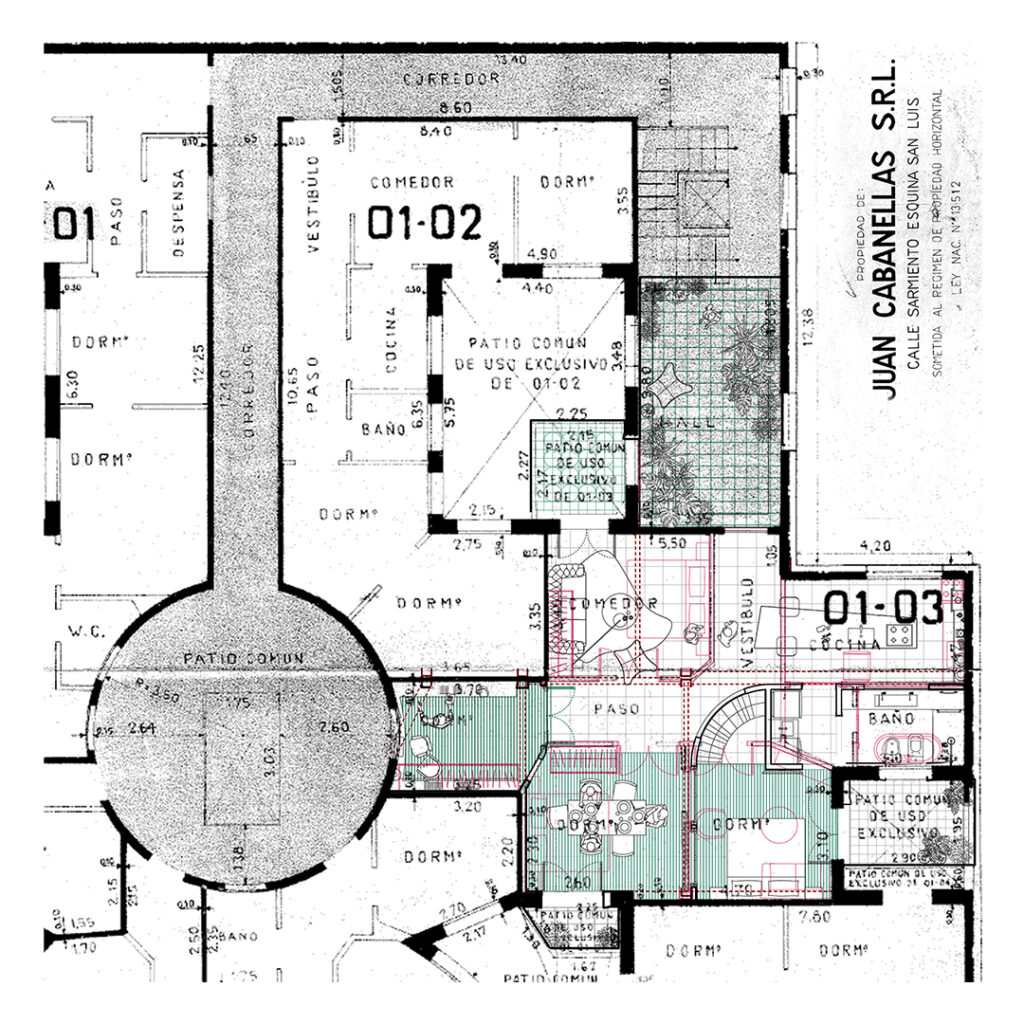
The commission to remodel a flat inside the Palacio Cabanellas, a 5 storied housing complex from 1916 located in the heart of Rosario, was first and foremost an opportunity to reflect on historical heritage. How should we interact with a building that is over 100 years old? Which of their elements truly holds historical significance? Could those elements be thought of as a resource? The fundamental configuration of the proposal is closely tied to the original project, as if it were an implicit subject directly influencing the syntax of a rewritten sentence.
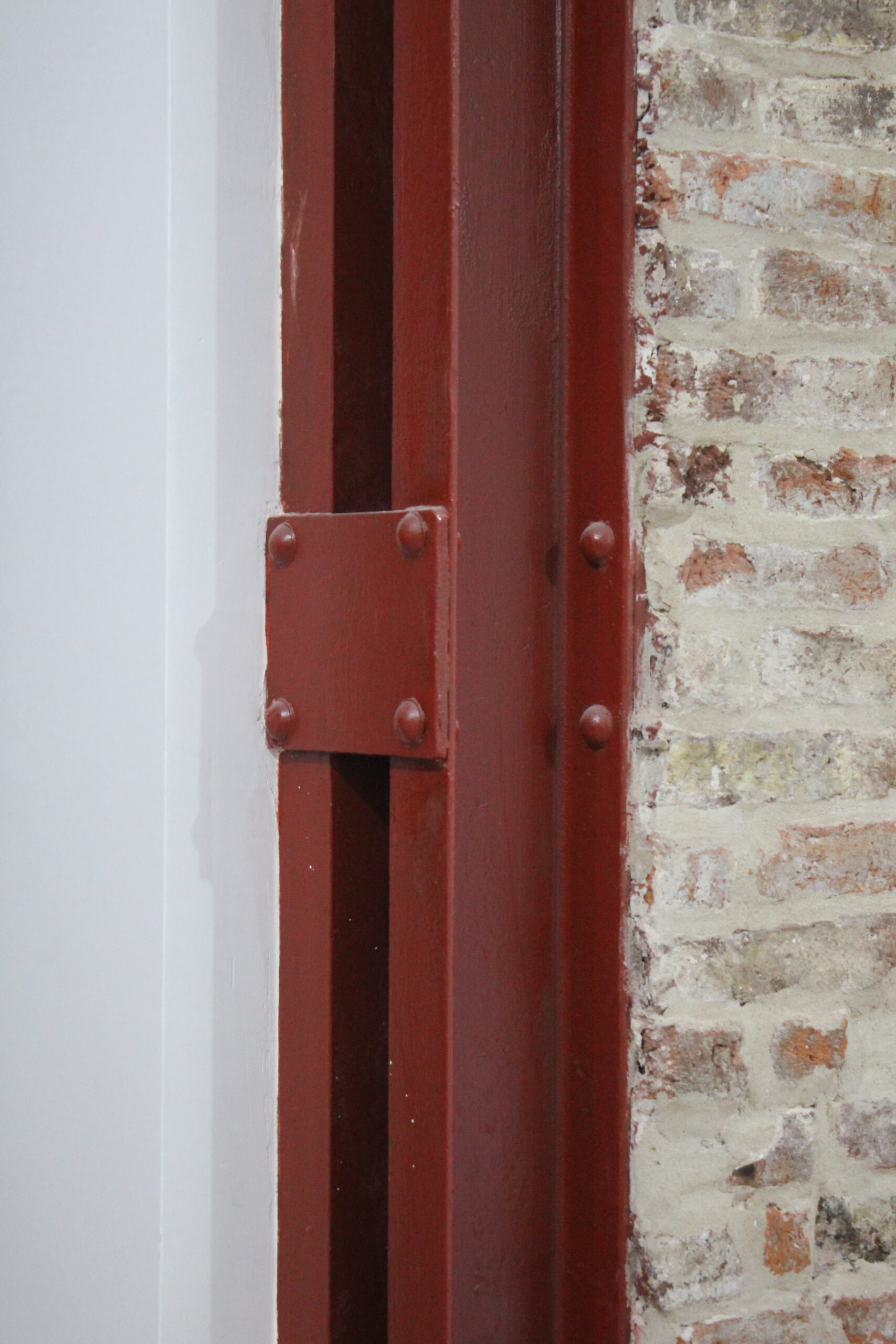
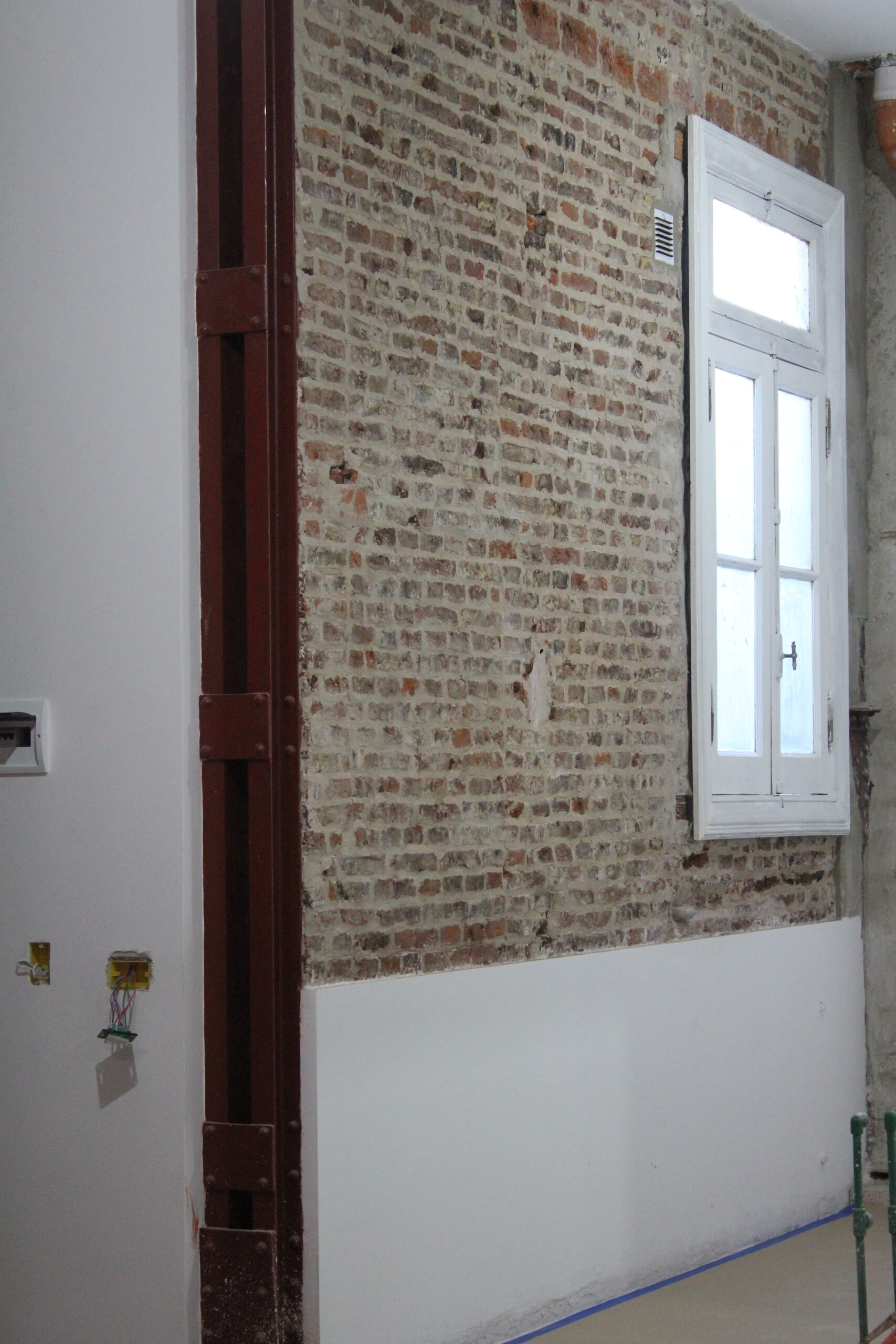
From this perspective, thinking in terms of historical heritage necessarily implies embracing what has been inherited without accepting it uncritically. Thus, the new configuration of the residence, far from a sterile reverence for the old, begins with a radical operation. Thus, the project assumes a starting point: the demolition of all interior partitions—weak, prone to damage, and lacking any ornamental, structural, constructive, or spatial value. And it is through this operation that the first organizing principle of the proposal emerges, the true architectural element to be highlighted: the metal structure, concealed for a century beneath the veil of plaster.
In the perimeter of the residence, the approach is more cautious but follows a similar logic. Just as the structure had been concealed, the same fate befell the brick walls that define the unit. Therefore, different sections are designated to expose the bond patterns. Meanwhile, the wooden carpentry elements (doors, windows, and screens) are restored and brought back to their full value.
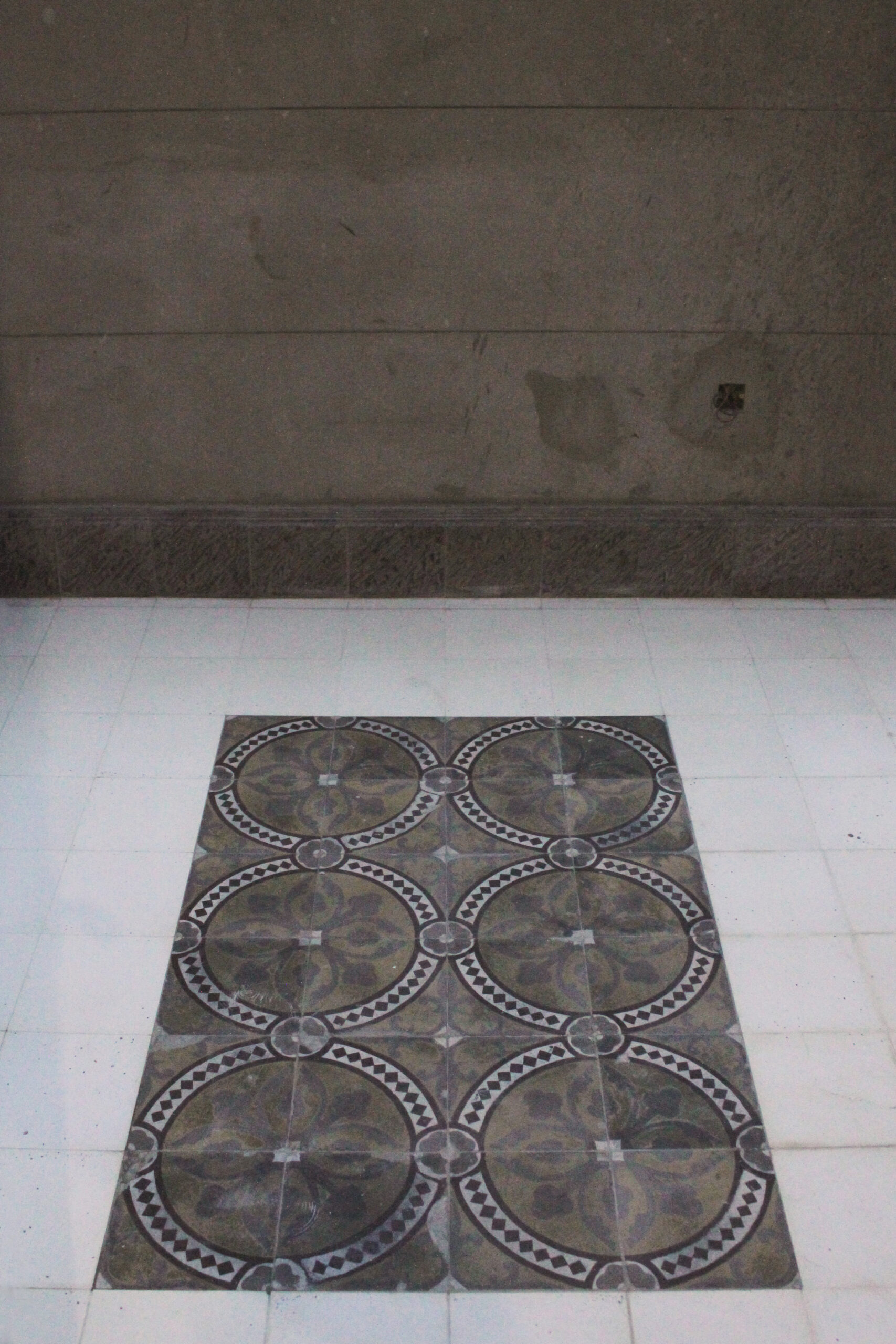
The renovation can be understood as the consolidation of a fractured temporality. Like looking through a broken mirror, fragments of time appear juxtaposed. If one focuses on the elements, they may be recognized and placed within their corresponding historical period, yet they always appear transfigured, displaced from their original time.
At the center, the original doors reappear—but now relocated, redefined, and reinterpreted. Both at the perimeter and in the core, a time preceding the building’s inauguration resurfaces: the structural framework and the brick walls reveal what the Palacio Cabanellas itself once chose to conceal beneath layers of plaster. Scattered throughout the house, contemporary interventions emerge. The marble countertop that defines the kitchen, the core that shapes the laundry area, the bathroom—each of these elements is designed to obscure its contemporary origin while simultaneously bringing the materiality of the building’s hallways into the interior. The curve echoes the rhythm of the interior rotunda and the exterior corner joint. In the bathroom and dressing room, the divided glass window reproduces the character of the internal courtyard openings.



ESTUDIO QO + TAF
Design development and construction management
Collaborators
Design development and construction management
Arq. Emilio Farias
Arq. Santiago Ghione
Program
Renovation for a single family house
Area
86 m2
Location
Palacio Cabanellas
Rosario, Santa Fe, Argentina.
Year of design
2021
Obra en construcción