Built project, 2017-2022 / Pérez, Santa Fe, Argentina

Texto: Entrevista con integrantes de estudio qo y Taller de Arquitectura la Fundación por Beatrice Galilee
Beatrice Galilee: Can you tell me about the collaboration between Estudio qo and Taller de Arquitectura la Fundación for the Quimeco plant project?
Guillermina Borgognone (Estudio qo): The intervention at the Quimeco plant within the Pérez Metropolitan Industrial Park was realized through a masterplan developed between both our firms. This was our first large-scale project in collaboration with Taller La Fundación, with whom we share a studio in Rosario, Argentina. Although we had previously collaborated on some occasions, this commission allowed us the benefit of combining the complementary capabilities we’ve cultivated as we embark upon our still young though intense careers. This synergy is evident in the combination of an innovative and rational construction system with the spatial richness of the carefully designed interiors and furniture that we designed together.
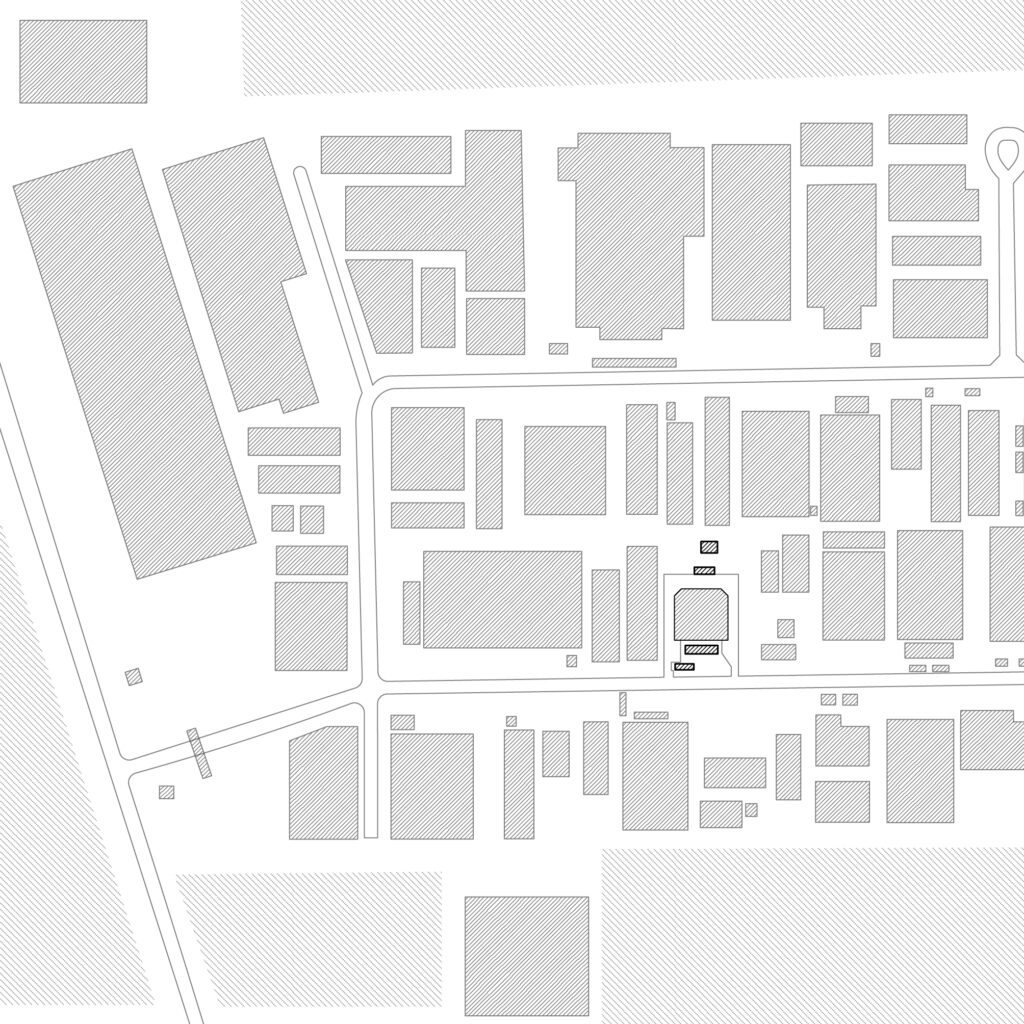
B.G.: What was the original brief from your client, can you explain the site and how you approached the spatial volumes required for the project?
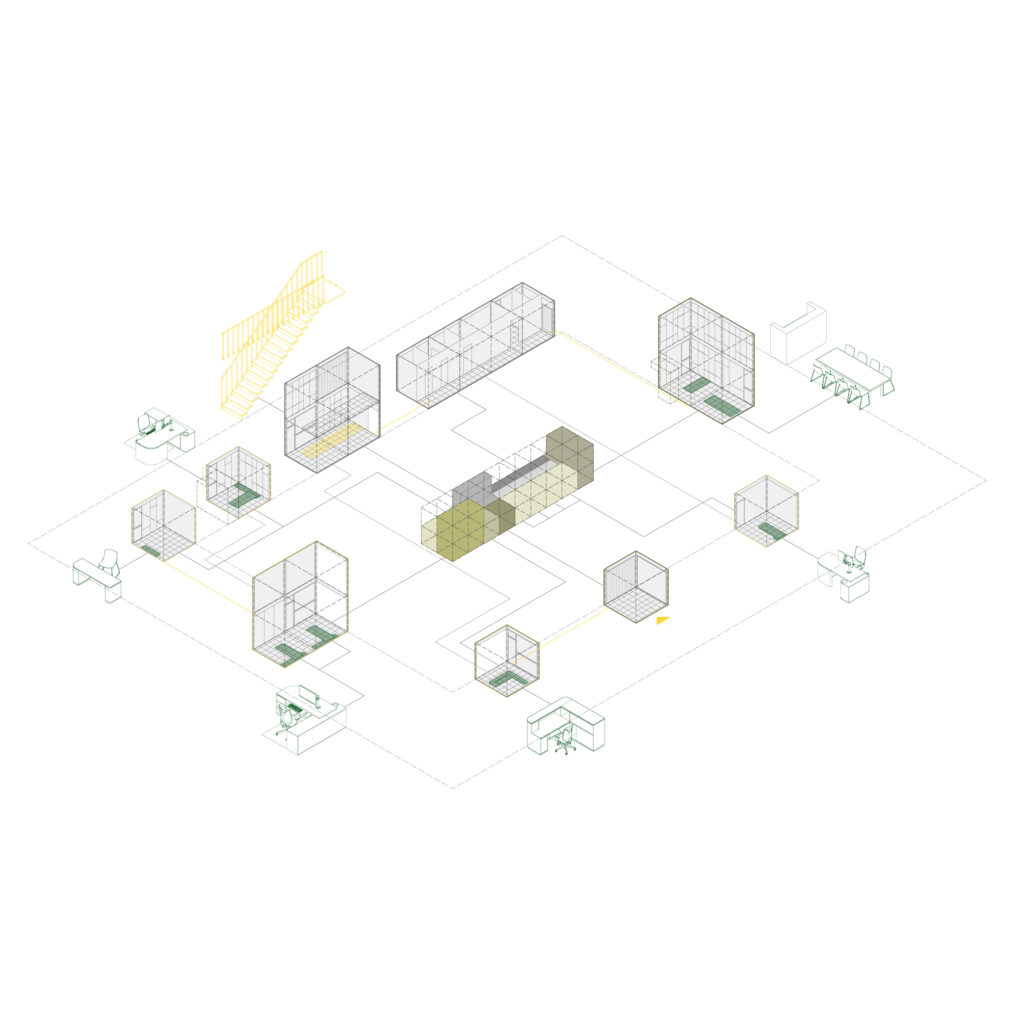
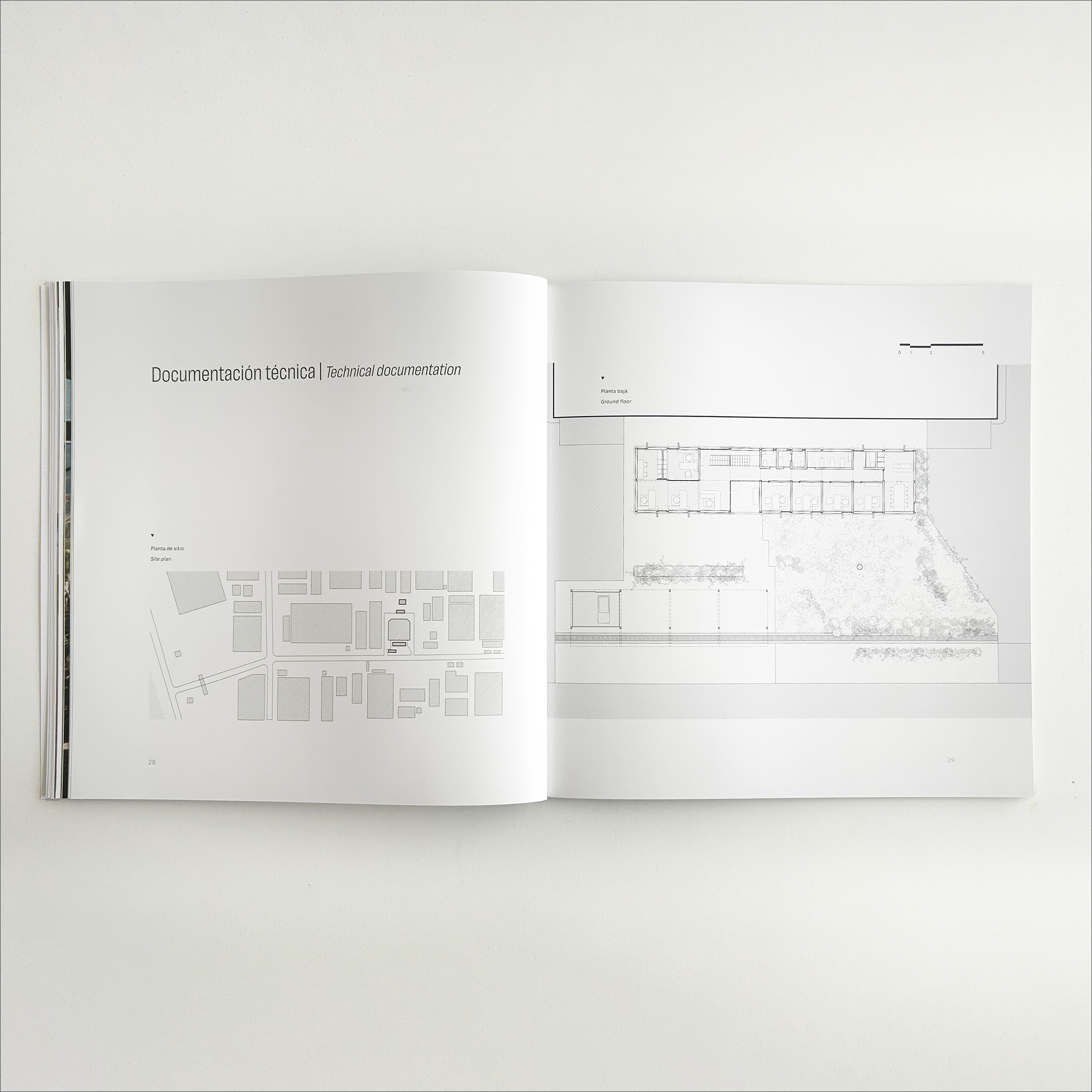
G.B.: The initial assignment requested an office building, but it derived first on the design of a multi-purpose space, known as EAM (in Spanish “Espacio de actividades multiples”), that served as a prototype for the modular system applied to the office building. This system governed all interventions on the site, which also includes an existing industrial building, two semi-covered parking areas, infrastructural elements, green spaces, and circulation. To illustrate the decisions that define the project’s character, the book presents a selection of these interventions, focusing on the two new buildings, EAM and offices, and the landscape design. Interior design was also addressed as an inseparable aspect of the overall project conception.

B.G.: Both of your offices are known for detail-oriented design in both domestic and cultural spaces, with an almost obsessive commitment to finishing. In a city like Rosario it must be challenging to find a commercial client who can support this approach.
Alejandra Garcia Lodi (Taller de Arquitectura la Fundación): We see ourselves as holistic designers, with our responsibilities taking into consideration not just the task presented by the client, but many things that were not considered in the original brief. The masterplan involved a wide range of interventions of varying scale, including operations regarding infrastructure, landscaping, adaptation of existing structures, and design of buildings, interiors, and furniture. This collaboration between the two studios and the company’s representatives started with their request for an easily executable metallic building. It was a shared effort among all parties involved, with each client proposal considered and contributing to the building’s programmatic and material strategy. This collaborative approach even extended to bespoke furniture design and interior strategy, that was thoughtfully created to respond to the needs of each workspace. No detail was too small, we ensured that every aspect of the project was part of our brief and we took pride in addressing every element of the project from the nuts and bolts of window frames to the landscaping. This in a city like Rosario -as you well noted in your questions- is quite a unique approach, that very few studios can say they do or even they want to.
B.G.: Tell me about the dramaturgy of space, how do visitors experience the site as they approach and enter the buildings? It seems to me that function interweaves with the layering of the different work areas.
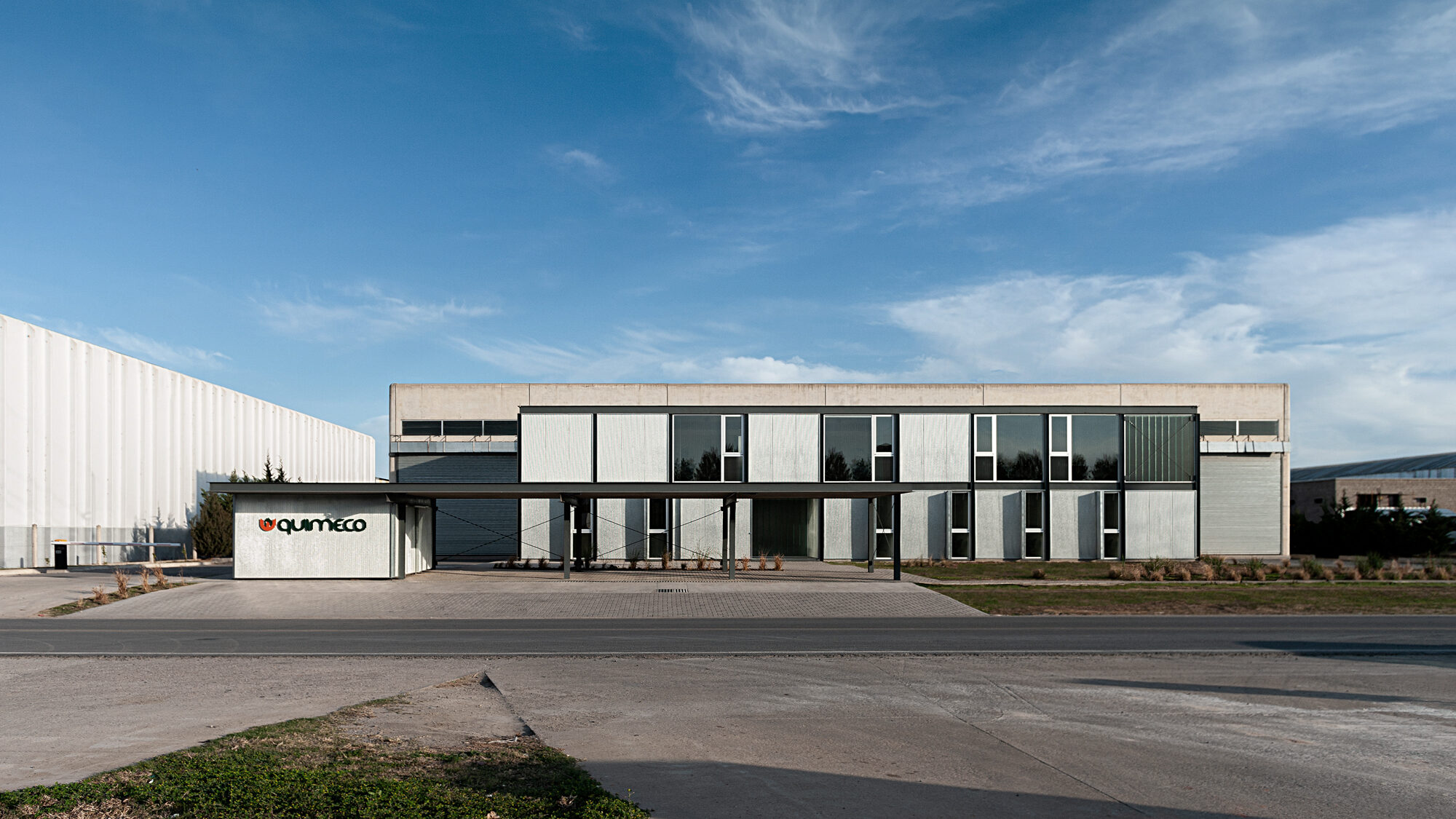
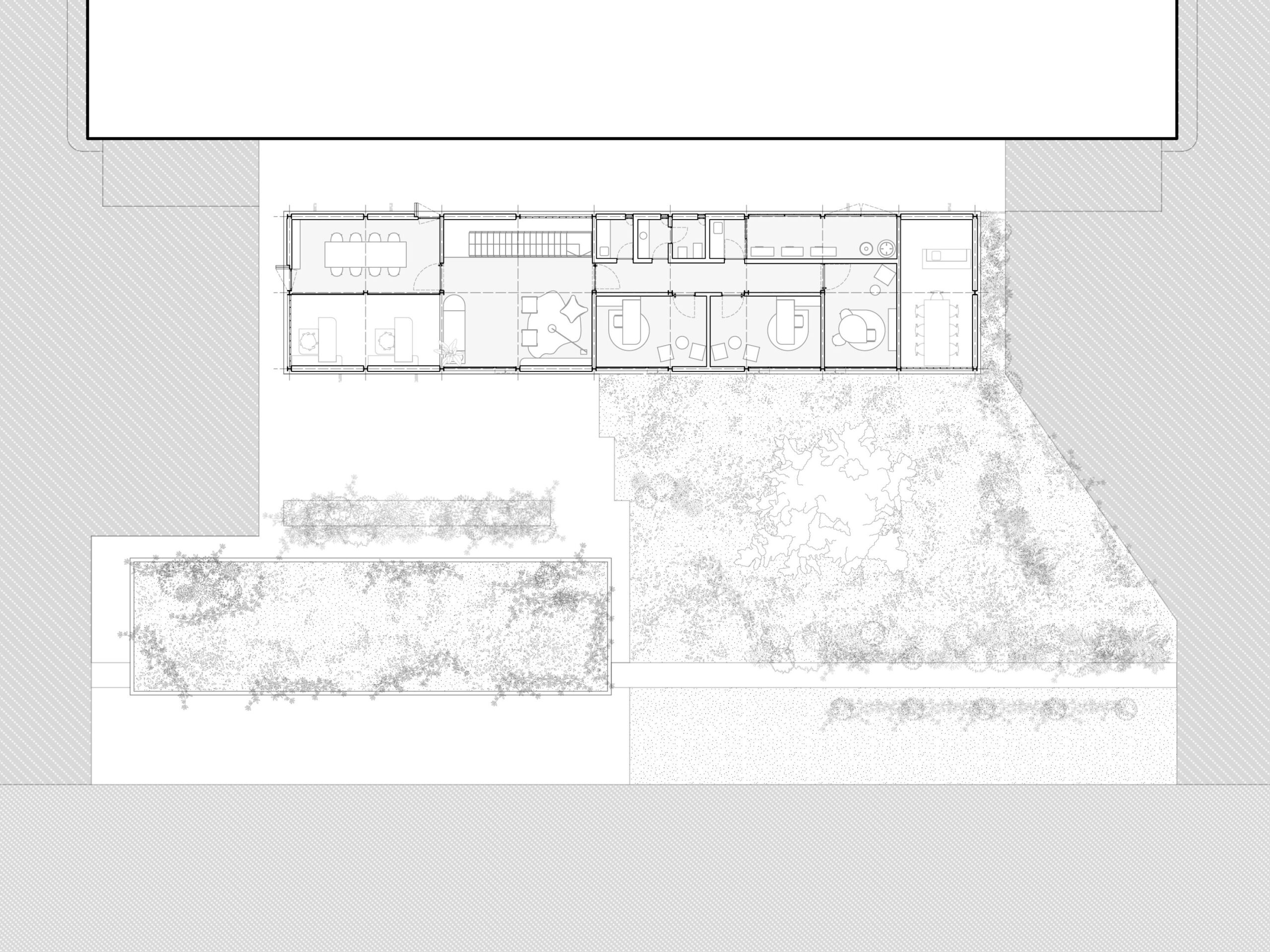
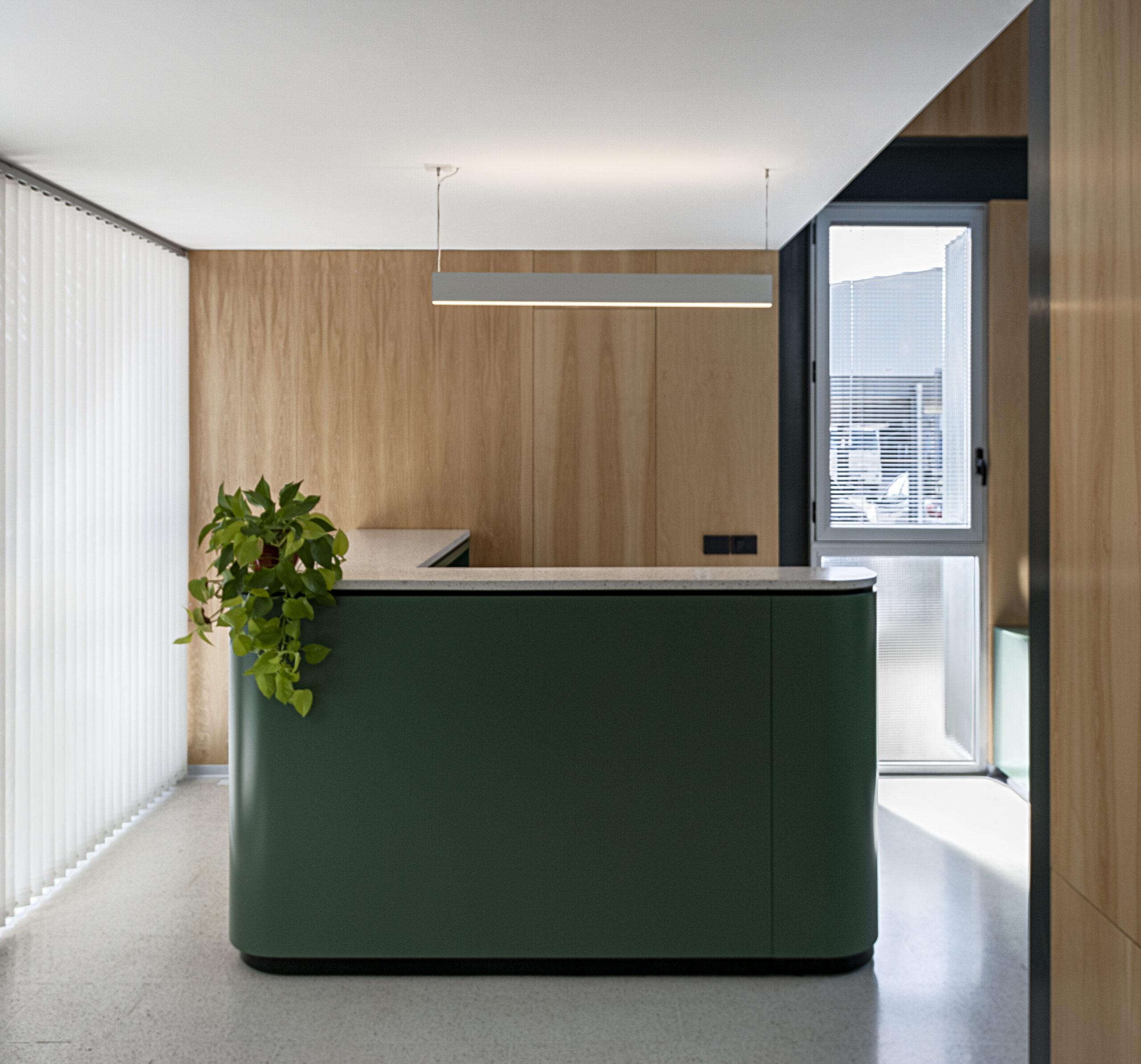
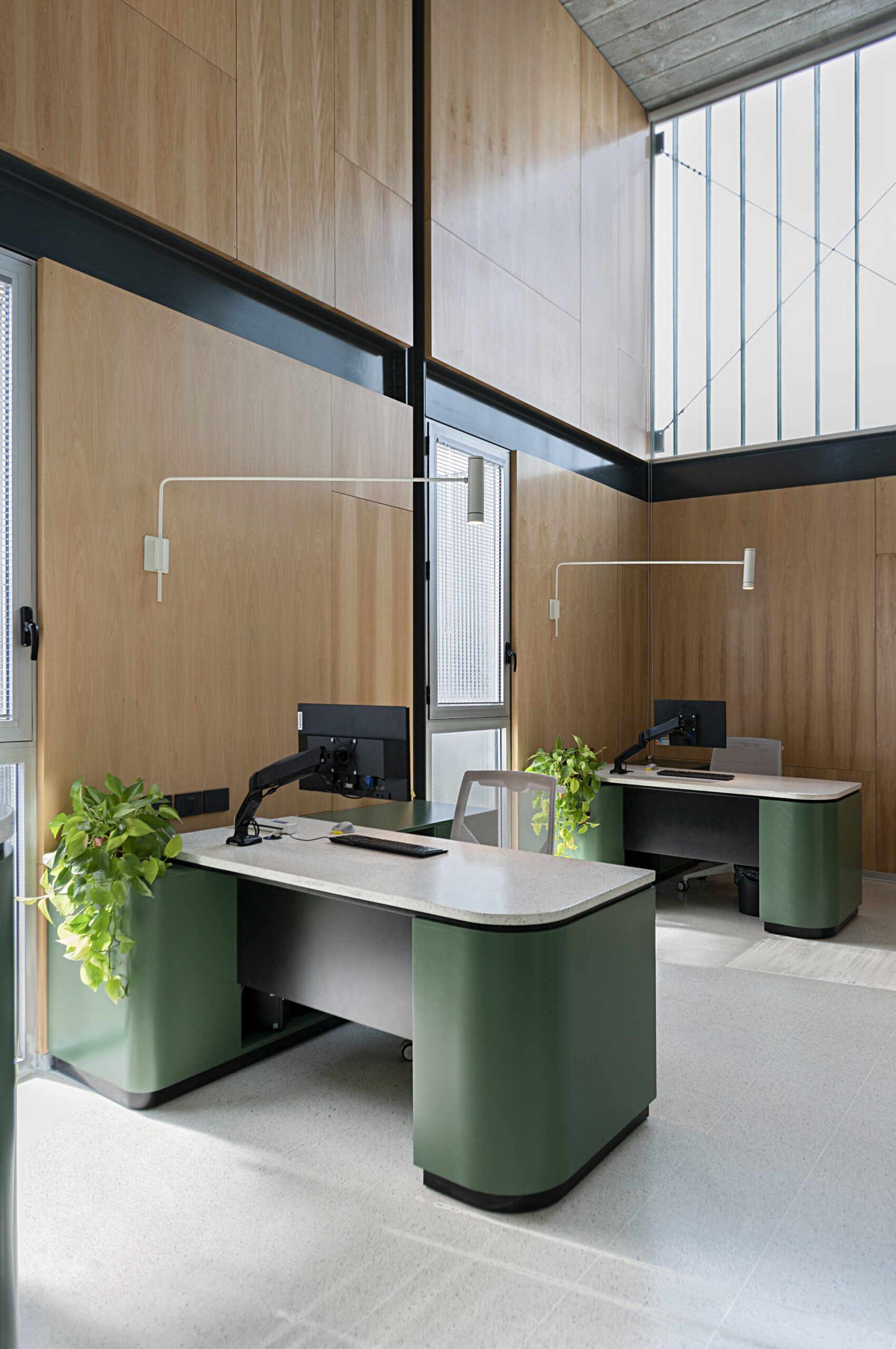
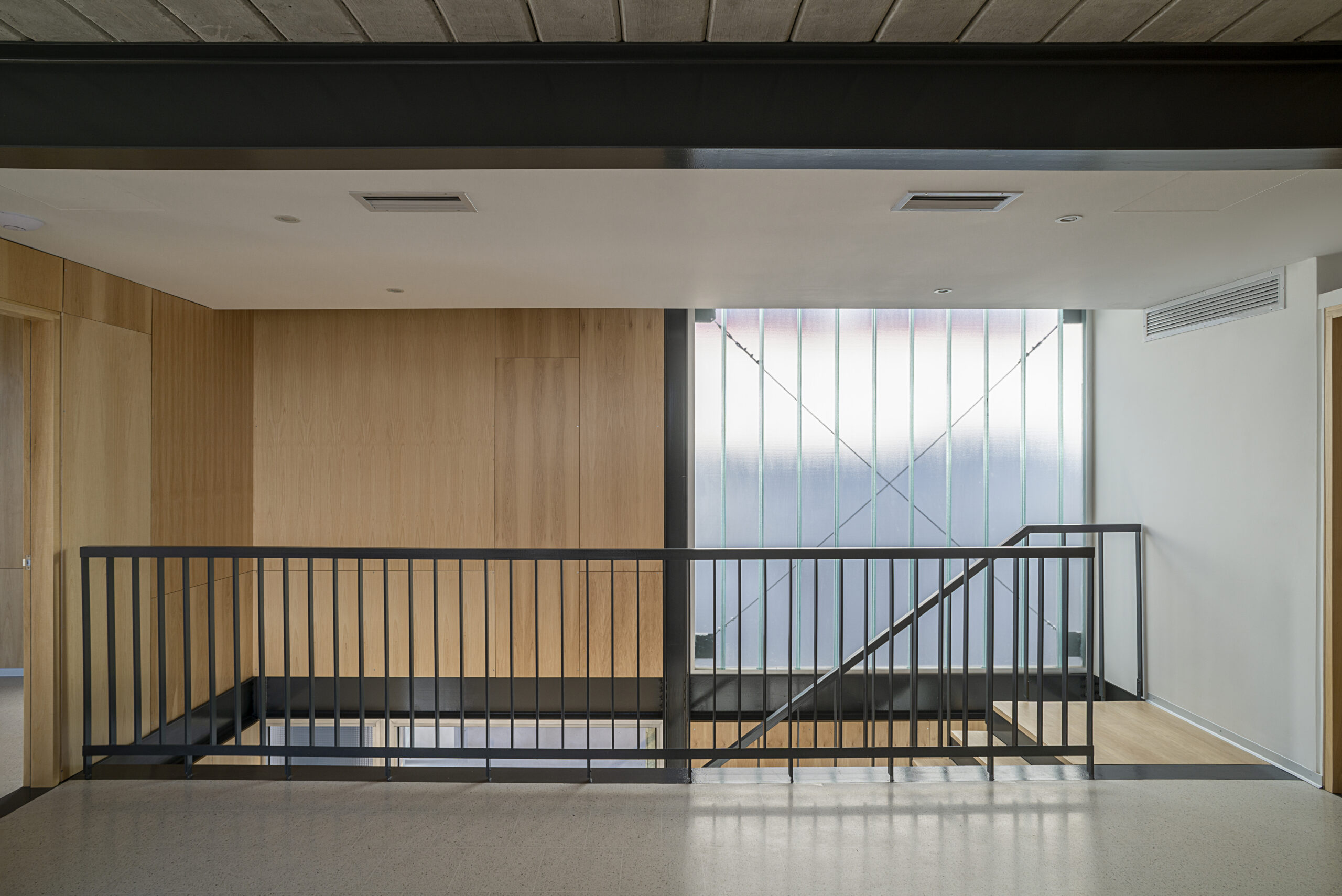
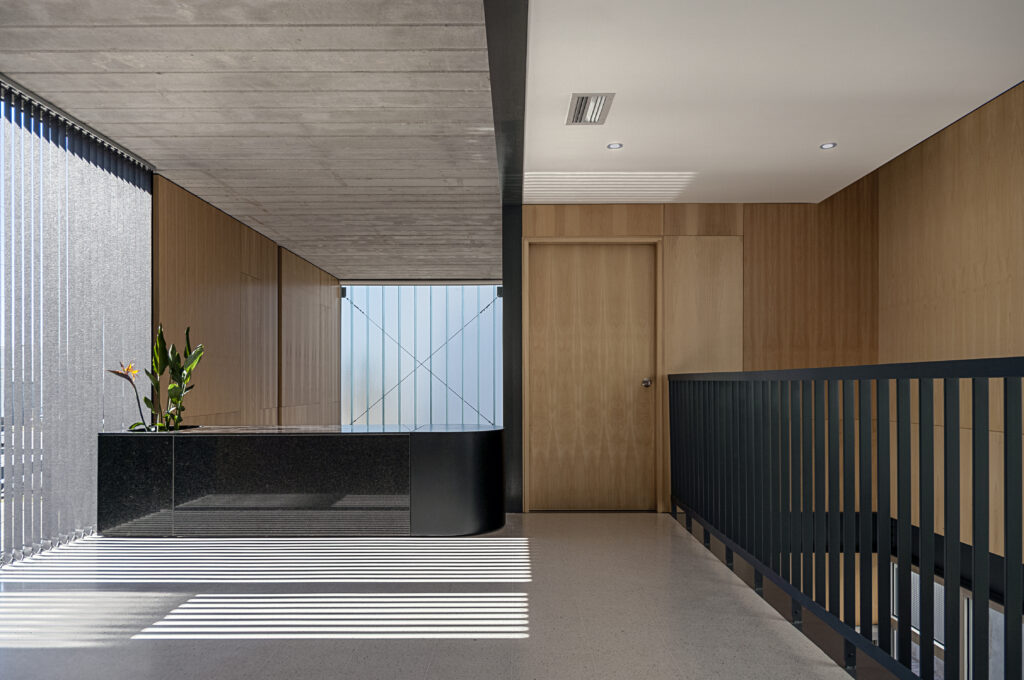
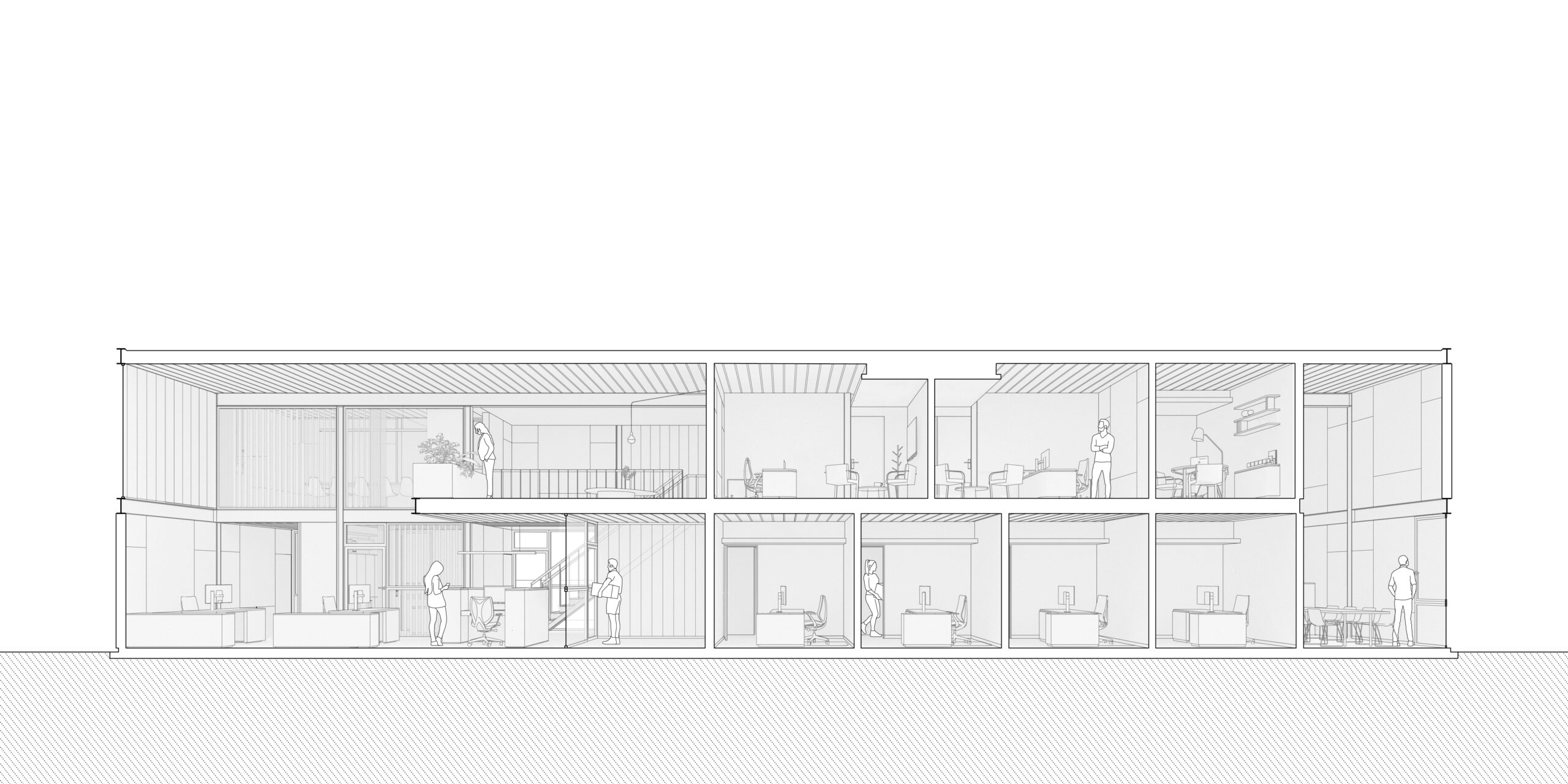
A.G.L.: Let me give you a breakdown of how the different components of the masterplan relate to each other. The modular volume of the offices is revealed as one progresses from the park entrance toward the lot. In front of the offices, there is a semi-covered parking area followed by pedestrian access for employees, suppliers, and clients. To enter, one must go through a gallery defined by an empty module of the structural grid that makes up the building. The ground floor concentrates customer service and other activities of the company’s employees. From the reception area, a double-height collective workspace is accessible, designed for the administrative and accounting sector. The upper floor houses three offices intended for company managers, offering a privileged view of the industrial park, and is equipped with a meeting room and a waiting room overlooking the double-height collective workspace.
G.B.: Perhaps I can add a comment about the space narrational qualities of our design, which we spent a long time considering, given the scarcity of other contemporary designs within the industrial park. It was in some ways a kind of response to the tabula rasa context of the flatlands of the Pampas, it’s worth noting that Rosario is in a bioregion called Pampa Húmeda (Wet Flatlands), characterized by a very homogenous topography. This is a very industrialized region, many buildings in the industrial park are only there to produce and manufacture, and therefore the architecture simply responds to the non-human need for fabrication, leading to a series of blank and faceless warehouse-like volumes. The goal for us was to bring a different scale and humanity for the people that work at Quimeco, and for the owners who wanted to bring light, nature, warmth, and ultimately see the value of great design and architecture as a tool to build pride, to develop an identity and create a healthy and positive environment for the company.
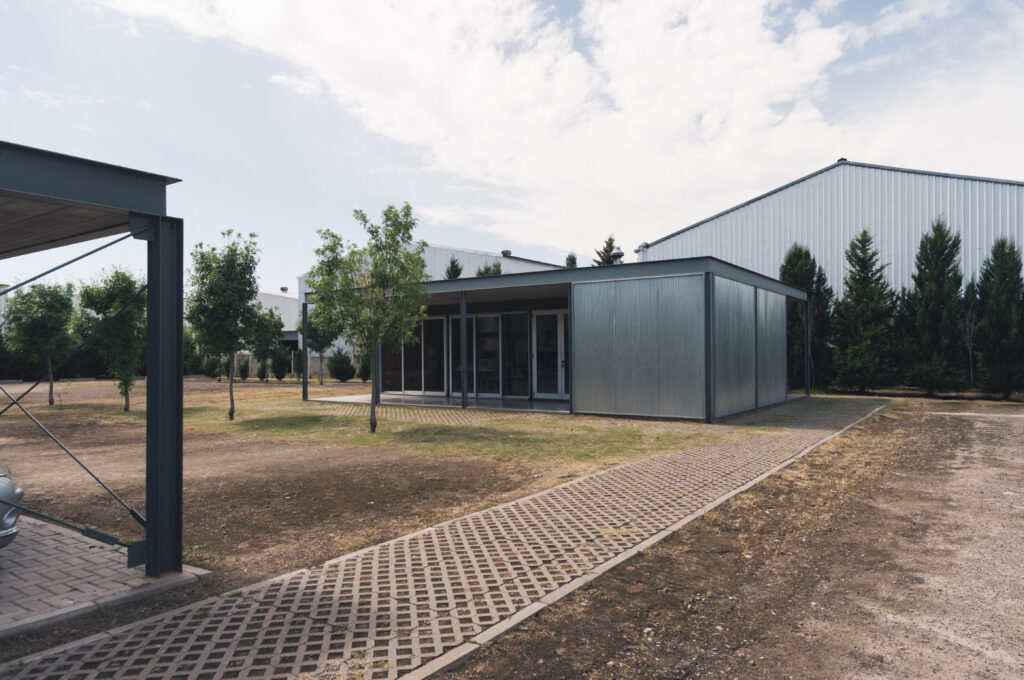
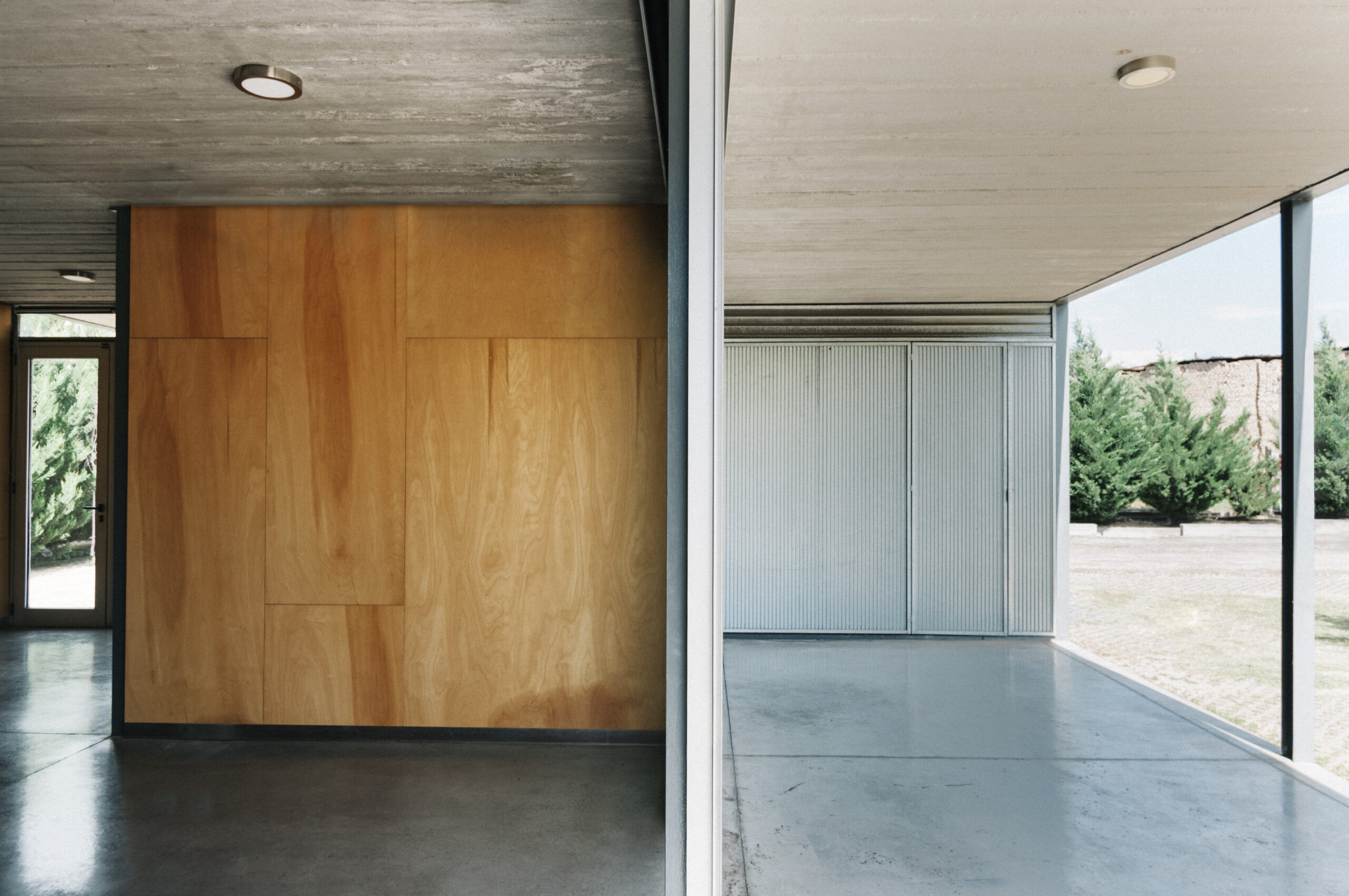
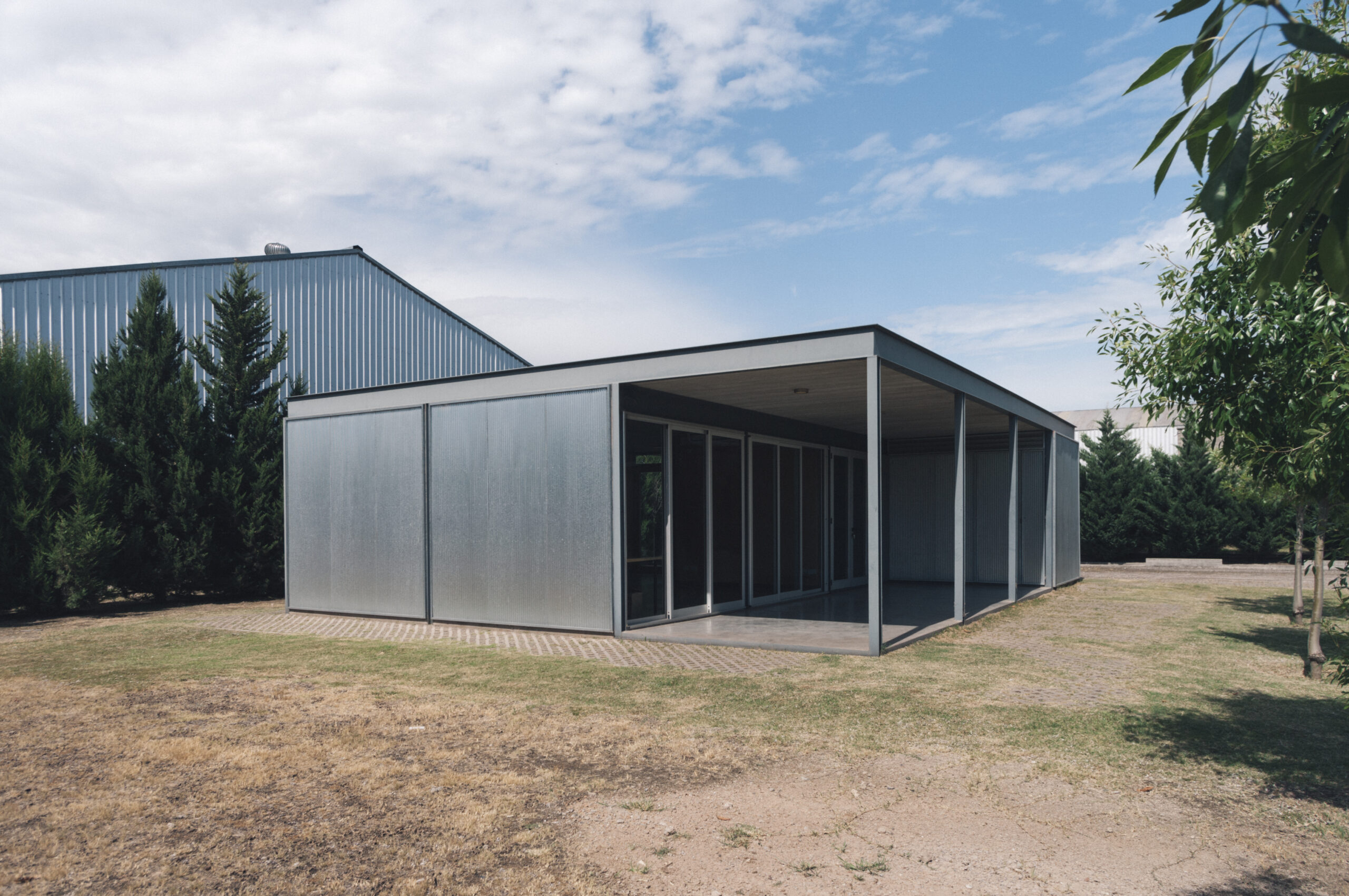
Returning to the masterplan’s breakdown, as one traverses the site, passing the office building and skirting the industrial structure, the EAM emerges—a single-story, prismatic volume that elegantly encapsulates a versatile space tailored for diverse activities. This structure is a testament to the modular system’s ingenuity, serving not only as a functional prototype but also as a seamless integration of form and utility. The EAM is meticulously designed with its own dedicated service core, allowing for a wide array of applications. Two distinct galleries complement the volume: the smaller gallery, discreetly positioned at the rear, functions as a secondary entrance, while the larger gallery at the front acts as the primary entrance and facilitates an extension of the interior space. This design approach underscores the modular system’s adaptability and its capacity to harmonize with the broader architectural narrative of the site.
Offices



B.G.: What construction methods and materials did you use, and how do they define the buildings?
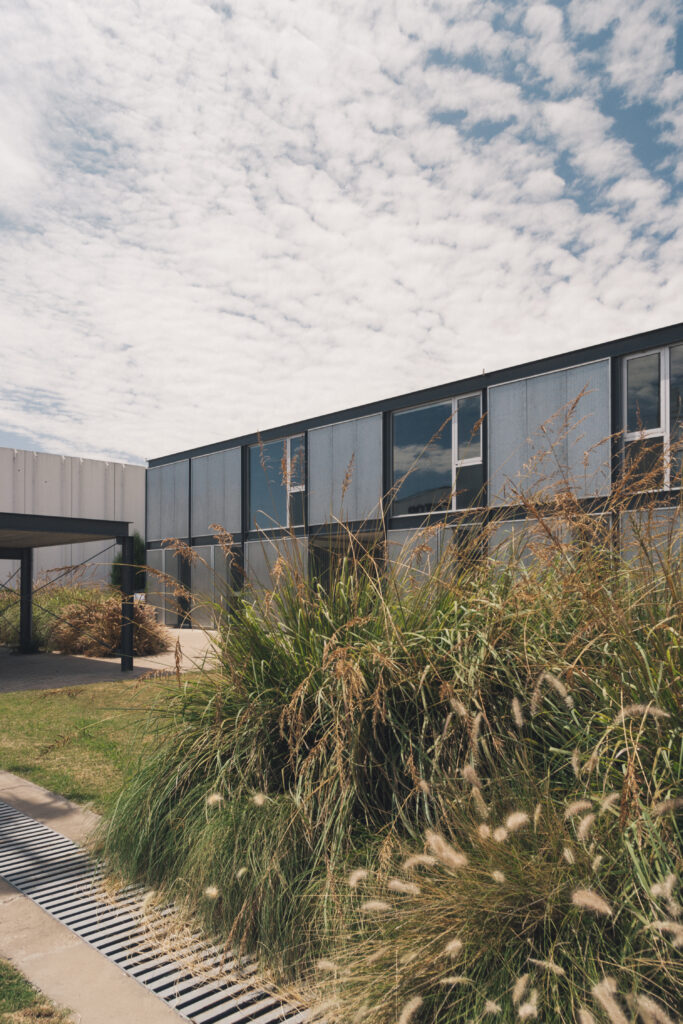
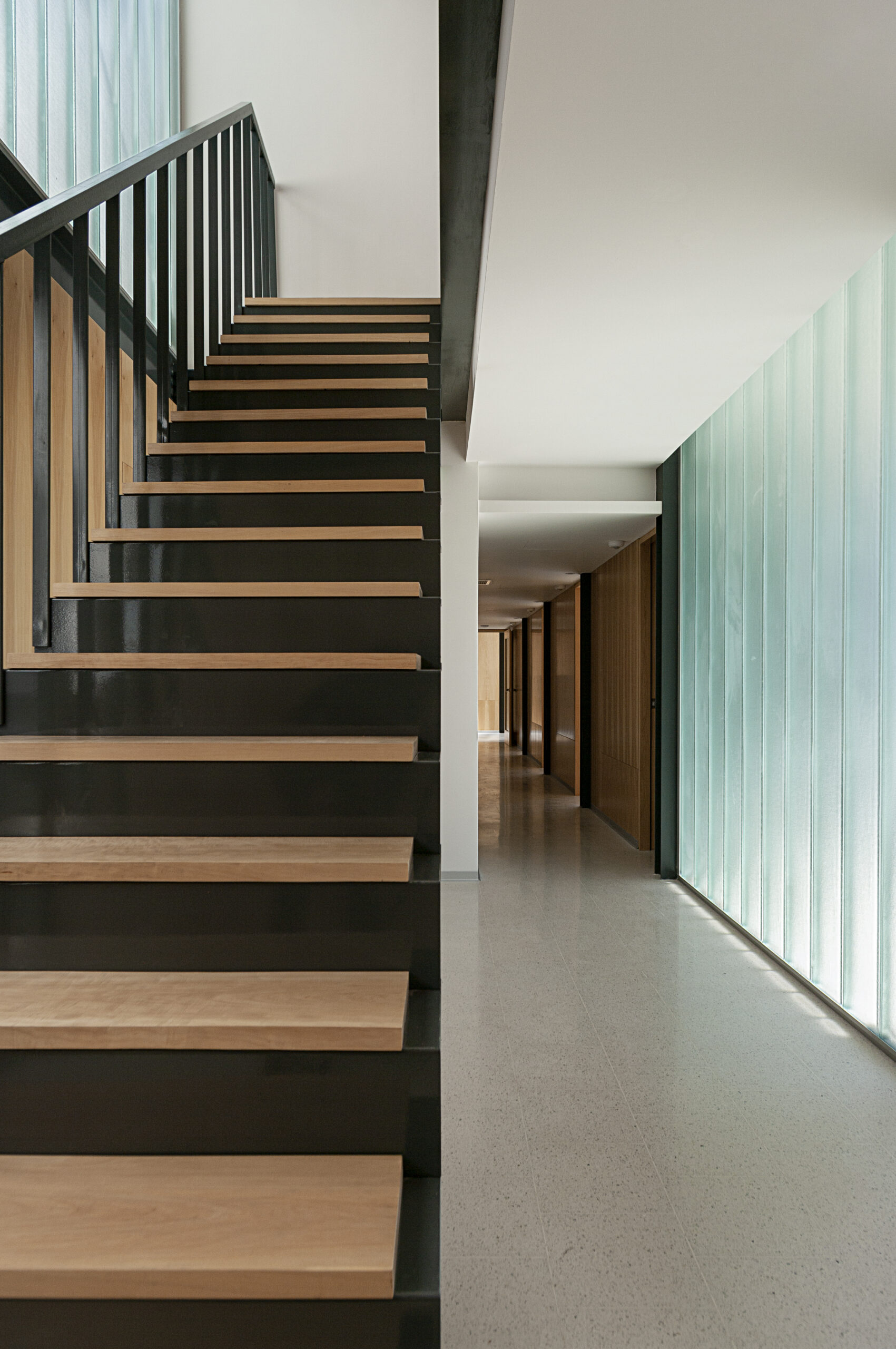
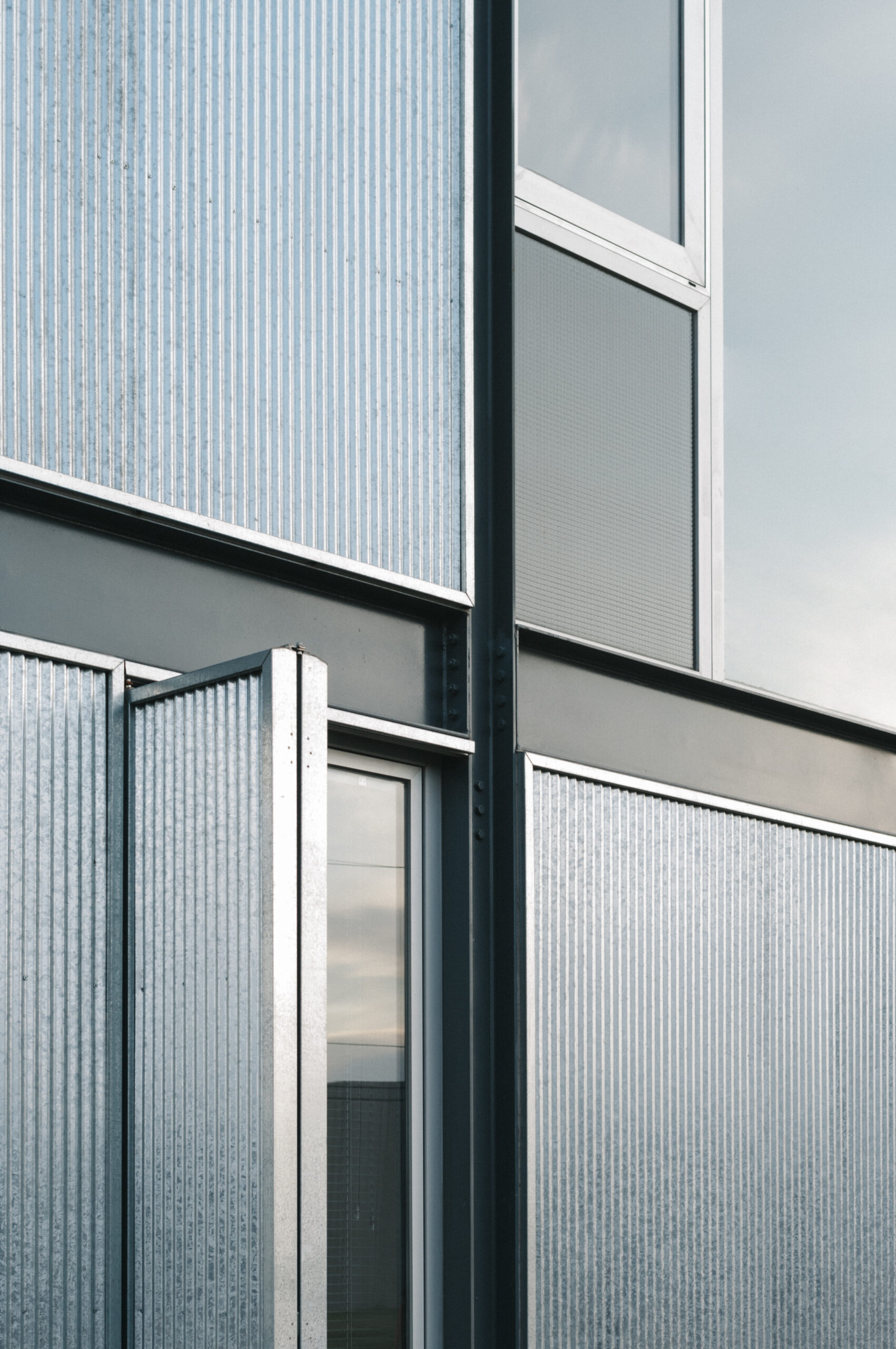
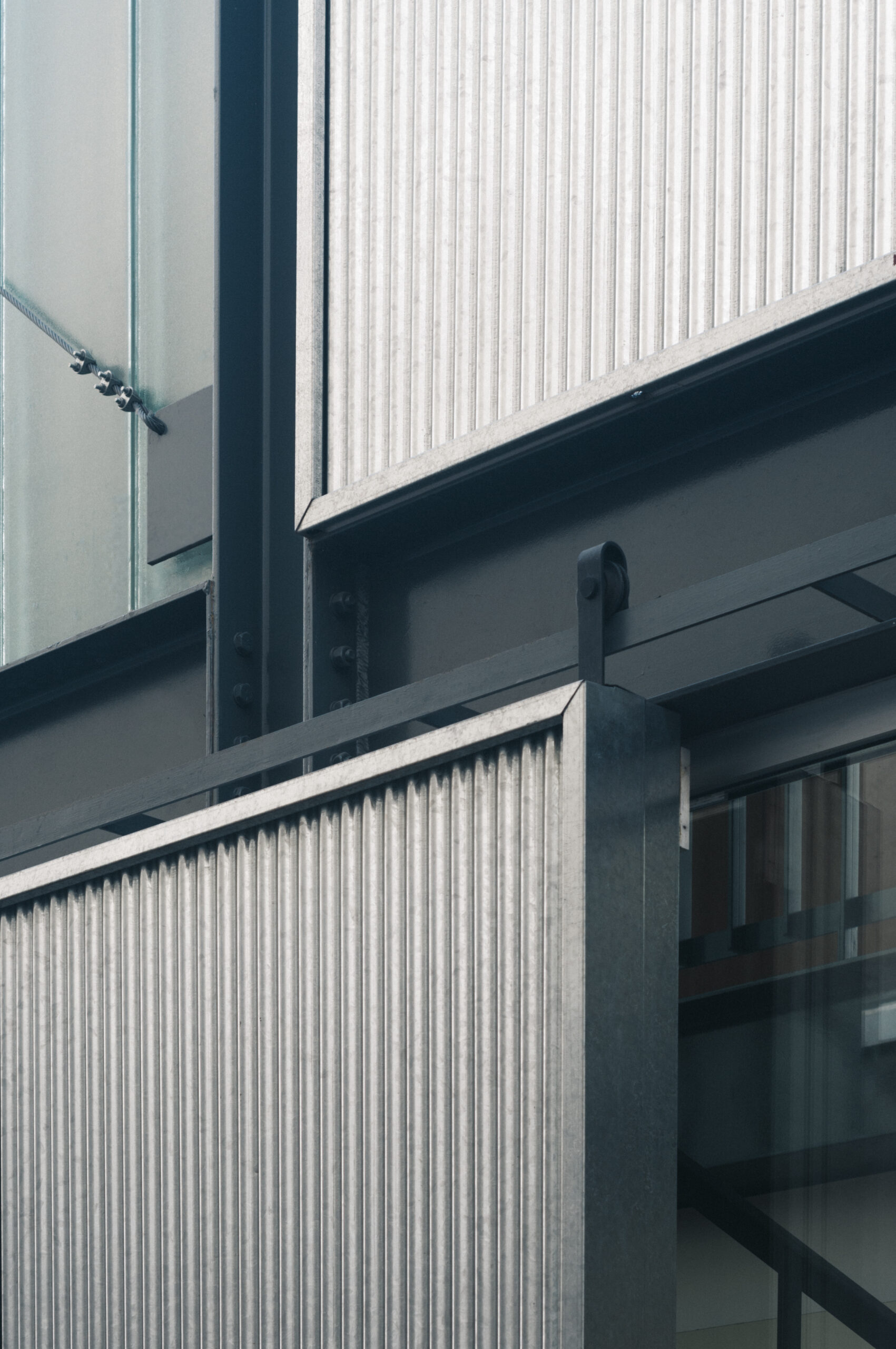
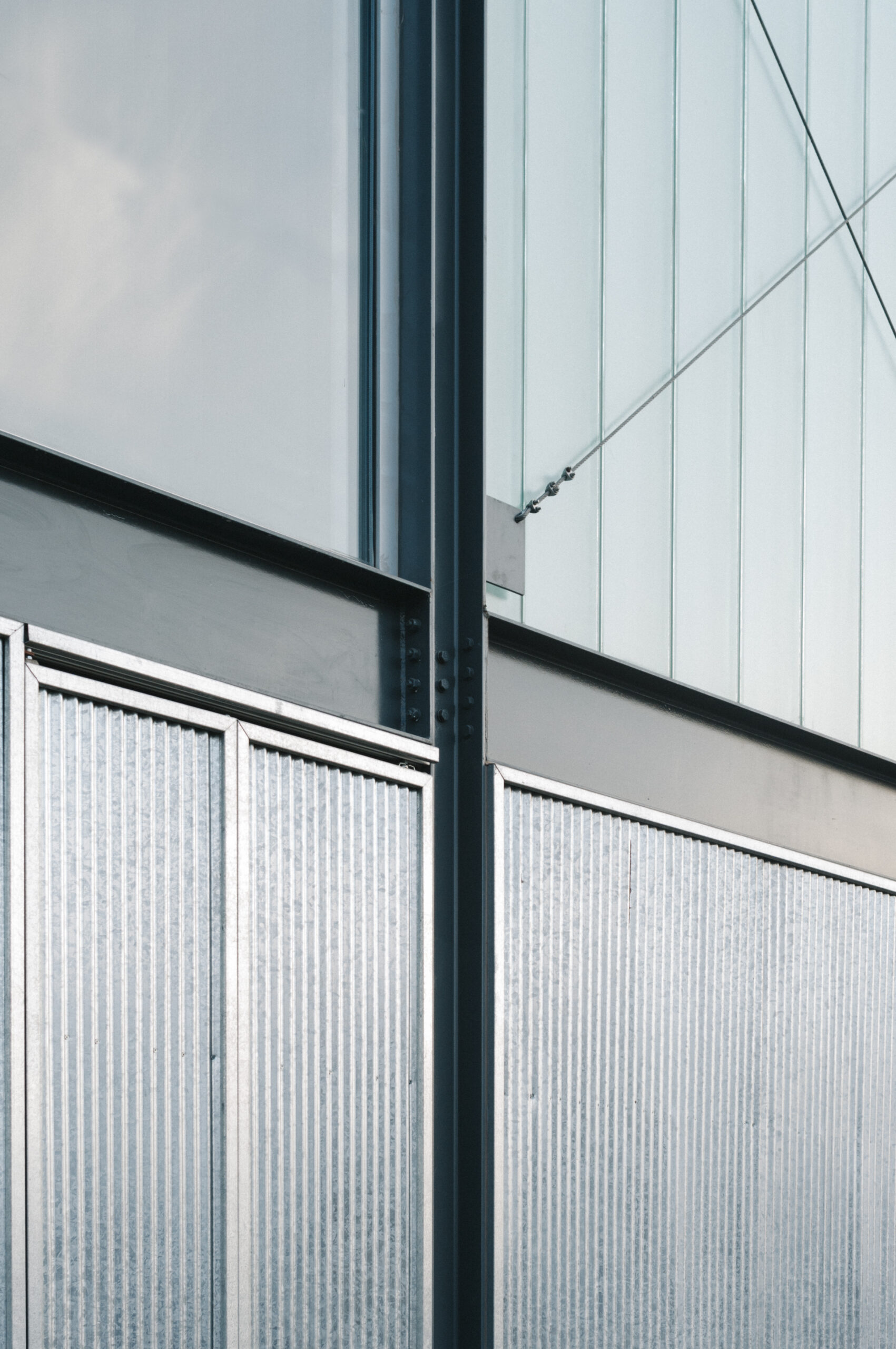
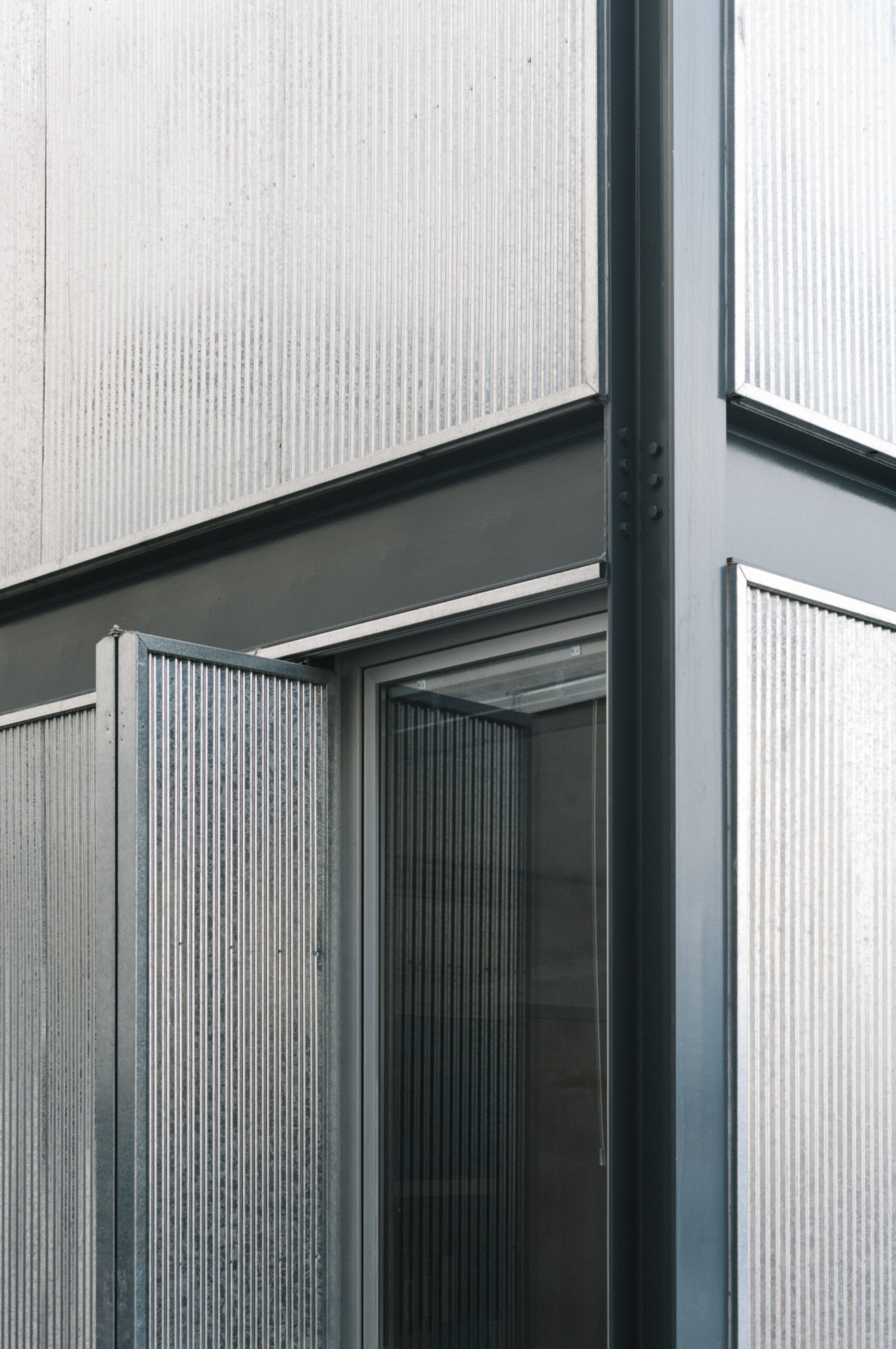
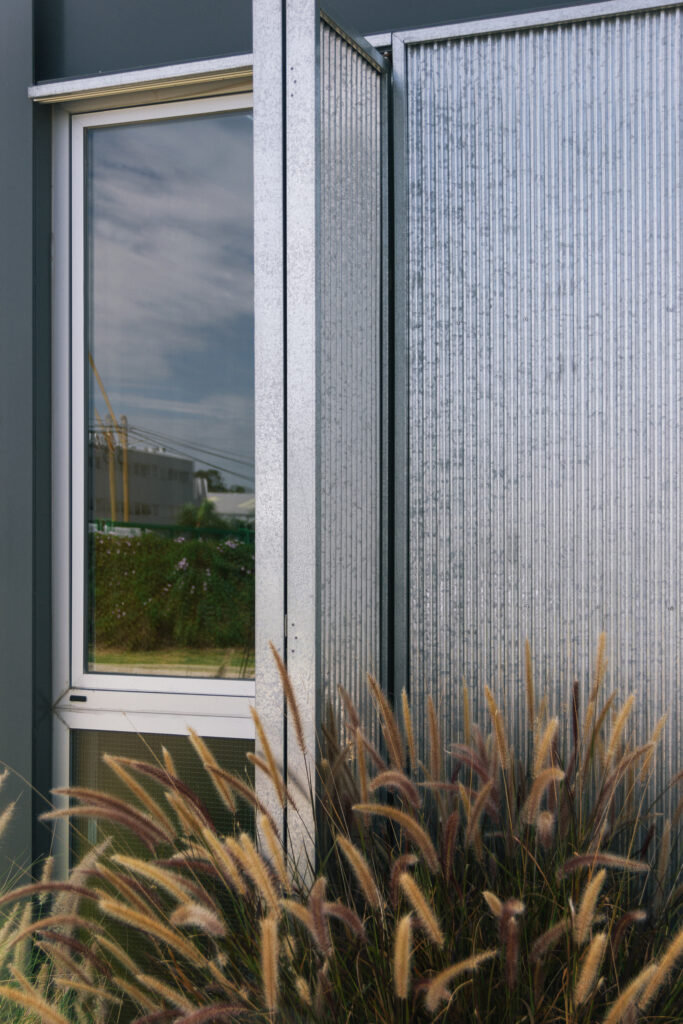
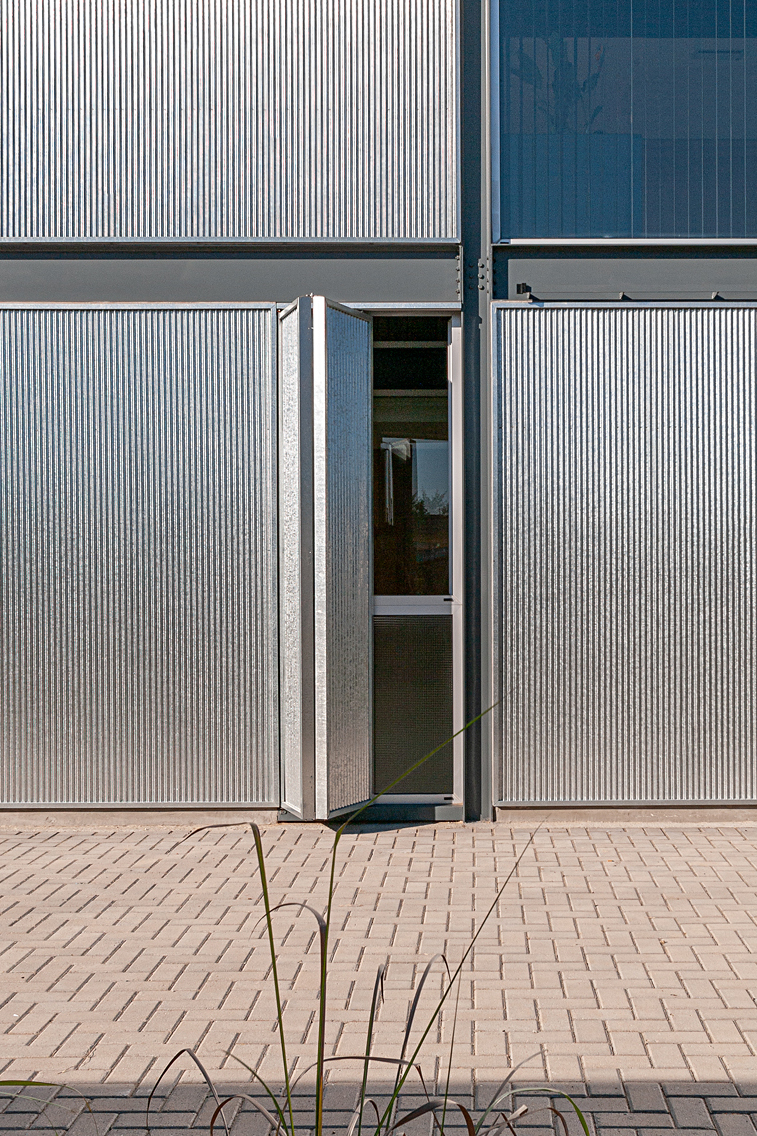
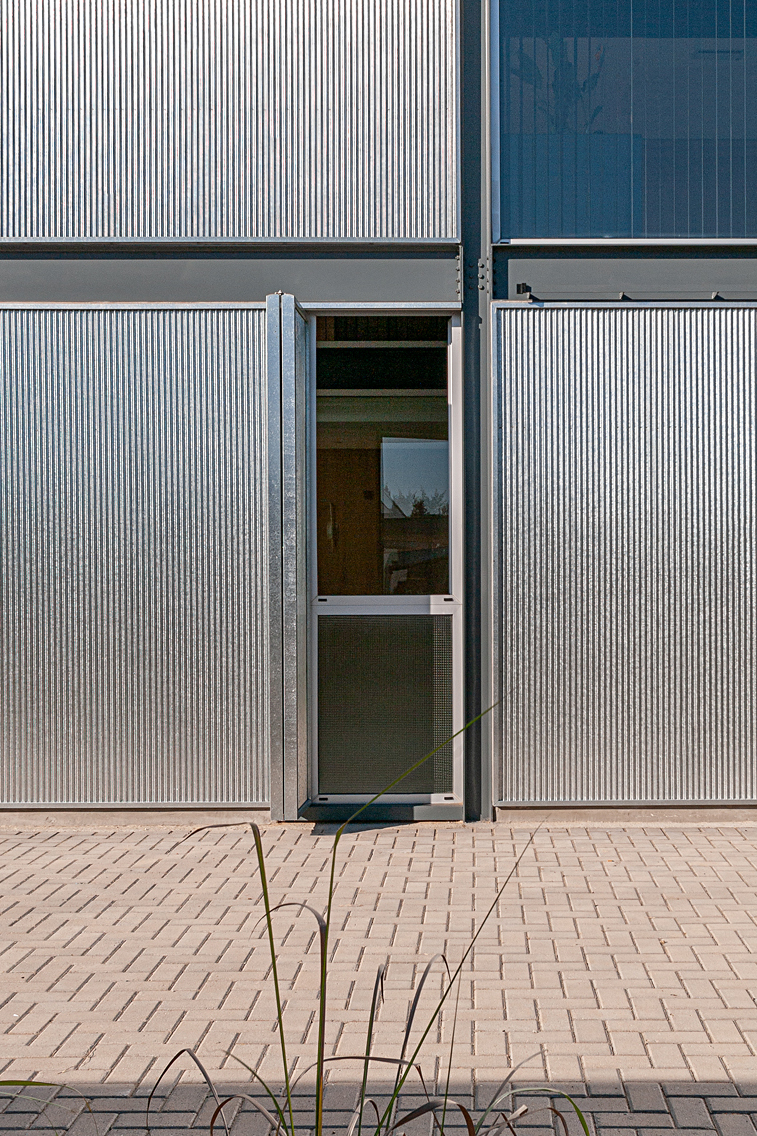
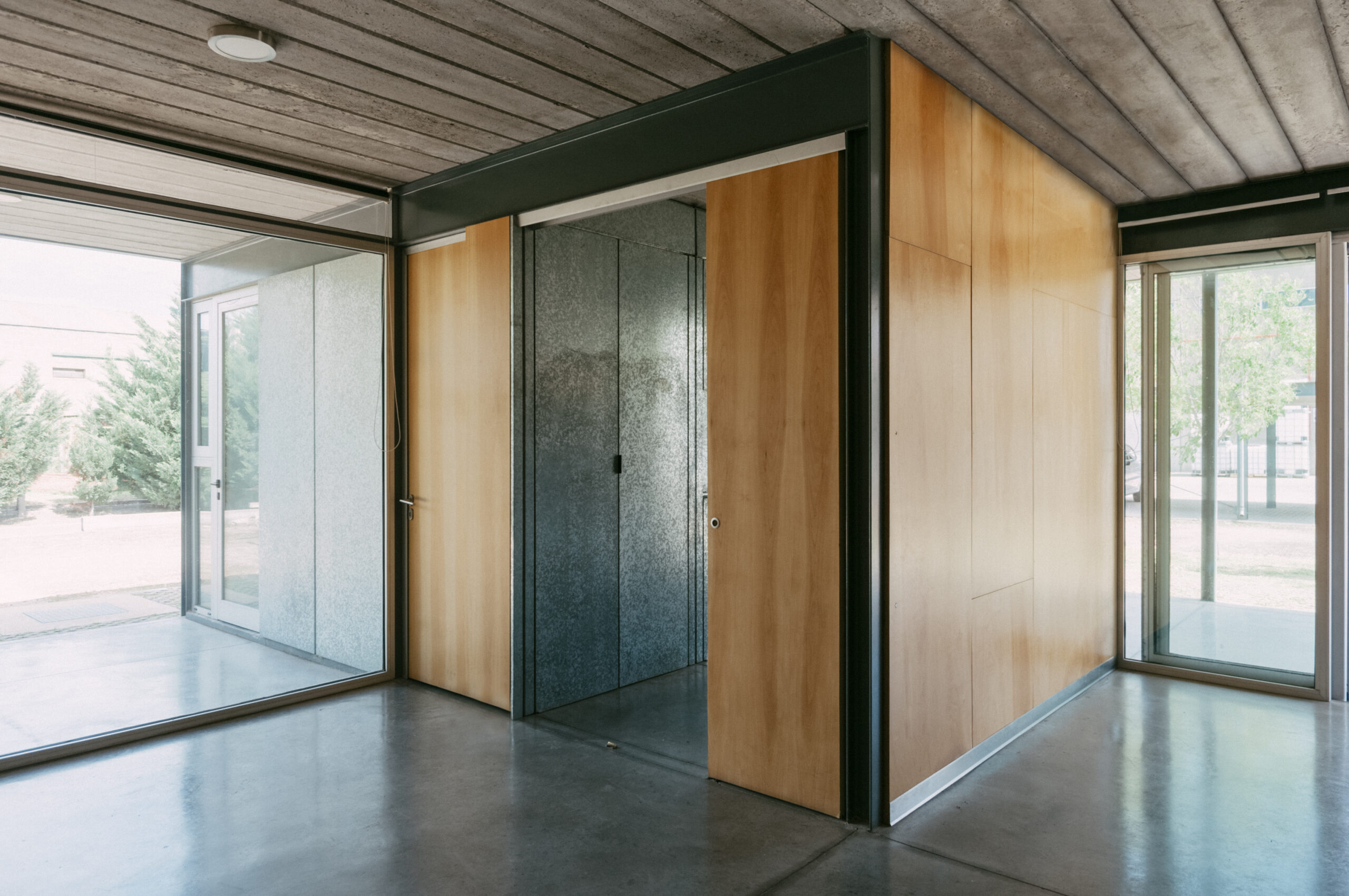
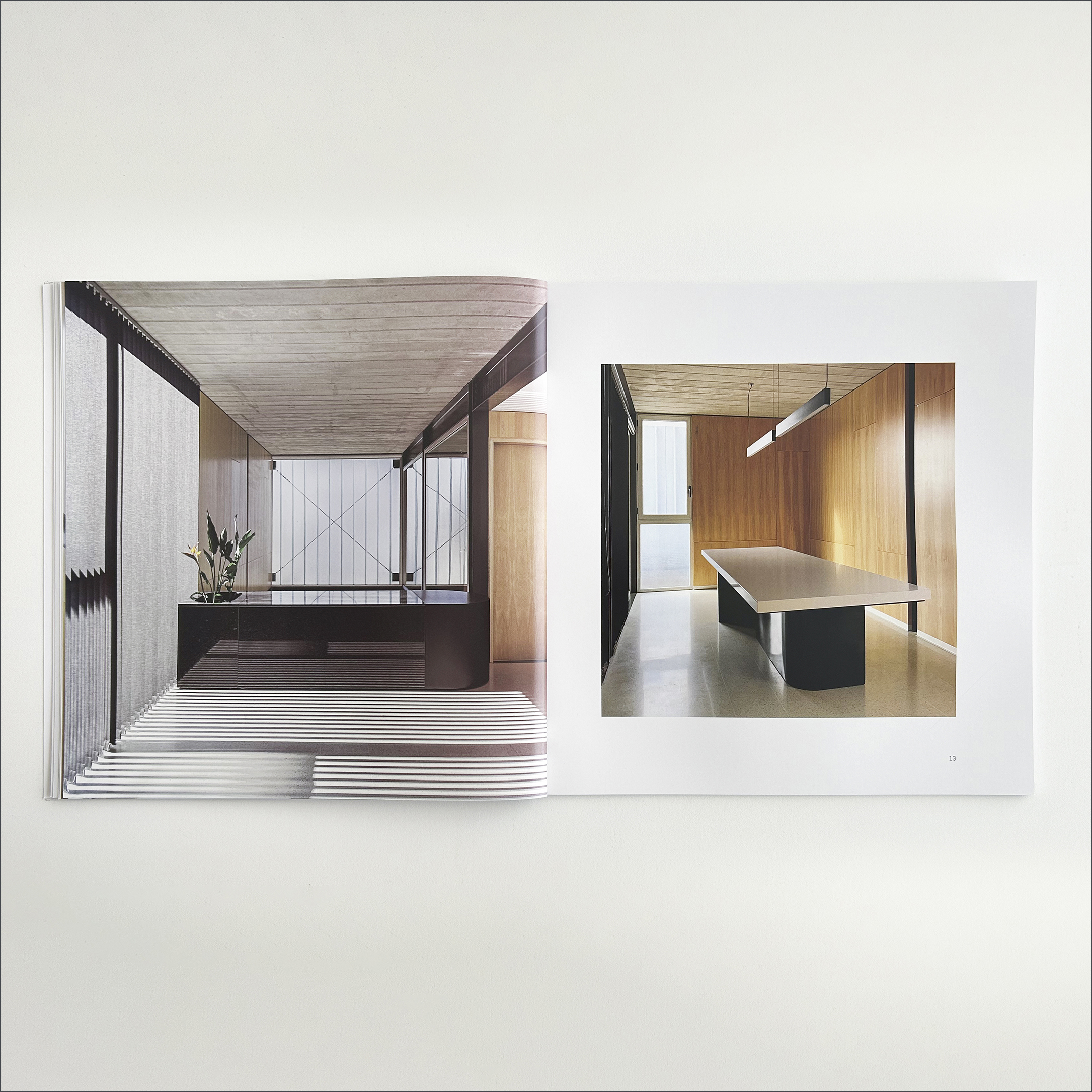
A.G.L.: Both buildings combine lightweight construction with traditional masonry and are defined by a 3-meter spatial grid, ensuring adequate dimensions for all programs. This grid is materialized through exposed metal columns and beams, both inside and outside, that support precast hollow core slabs and pre-assembled facade modules. These modules are part of a catalog of solutions employed according to each interior activity and include translucent and transparent glass panels and metal panels, both mixed and movable, opaque and semi-transparent. The latter allows a complete closure of the office building when inactive, ensuring security and accentuating its prismatic form. Externally, corrugated galvanized metal predominates, contrasting with the warmth of the interior light-brown wood panels.
B.G.: In your interior design approach, especially concerning finishes, was there a philosophy that guided you or a particular driving design force?
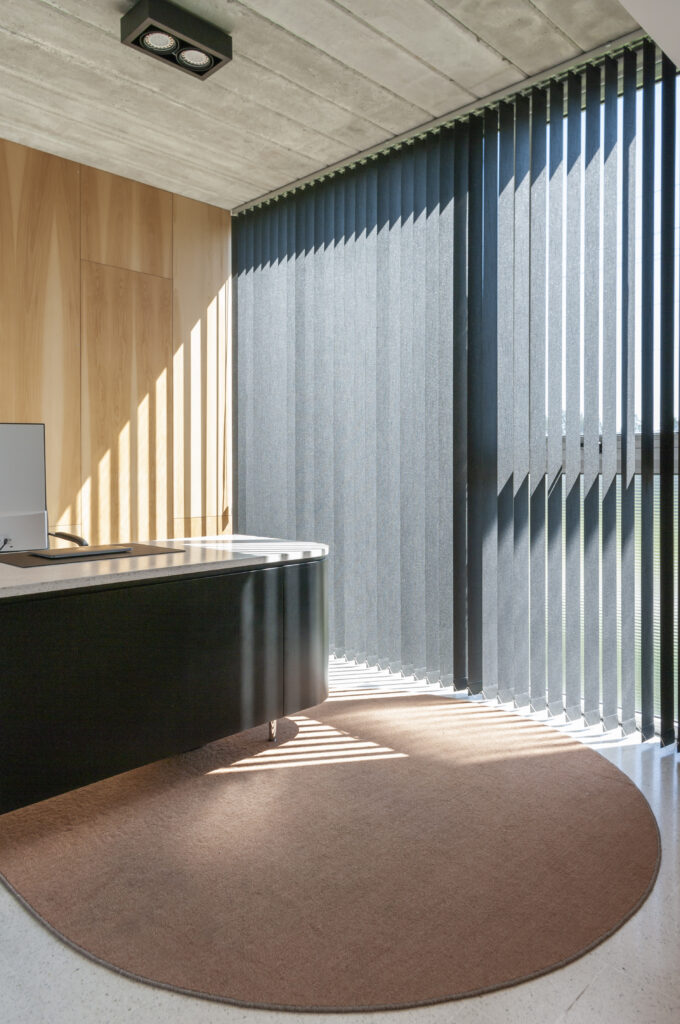
G.B.: Our approach to interior design focuses on both practicality and precision, always aiming for flexible, well-lit, and well-ventilated spaces. The fact that the buildings were completed during the pandemic further enhanced the value of this approach. We wanted to create a working environment that was about more than just functionality and operational ease, but that gave us a chance to talk about handcraft and the design of intelligent systems that mean the building could alter and adapt should a different function emerge in its future. Each piece of furniture was conceived not just as an object but as an integral component of a larger spatial puzzle, interlocking volumes that create a sense of harmony. This meticulous attention to detail is present in every corner of the project, this is something we have repeated quite often during our dialogue: both studios share a common ethos of obsession and sincere love and passion for the attention to details of fabrication, this you can see from the offices design to the reception desks and meeting areas, and it is a main characteristic of our thinking process and our professional practice.
The choice of finishes was informed by a desire to articulate a visual language that resonates with the brand’s identity yet challenges conventional norms. The inclusion of the company’s distinctive green is more than a branding exercise; it is a deliberate gesture that interacts dynamically with the soft hues of wood and the granular texture of granite mosaic floors. This palette acts as a catalyst, enhancing the spatial ambiance, and fostering an atmosphere that is at once vibrant and contemplative—a testament to the potential of design to transform the mundane into the extraordinary.
B.G.: Another way you pushed the envelope and exceeded the expectation and ambition of the client, was through a really thoughtful and committed long term approach to bringing in flora and fauna and developing a viable third space of an active and beautiful landscape.
G.B.: We embraced the challenge of enhancing the industrial park’s landscape by prioritizing lush, green areas. By minimizing the pathways and circulation routes to only what was essential, we were able to maximize the natural terrain. We carefully selected native plants and trees, strategically positioning them to create beautiful and inviting views both to and from the building, thereby fostering a strong connection with nature.

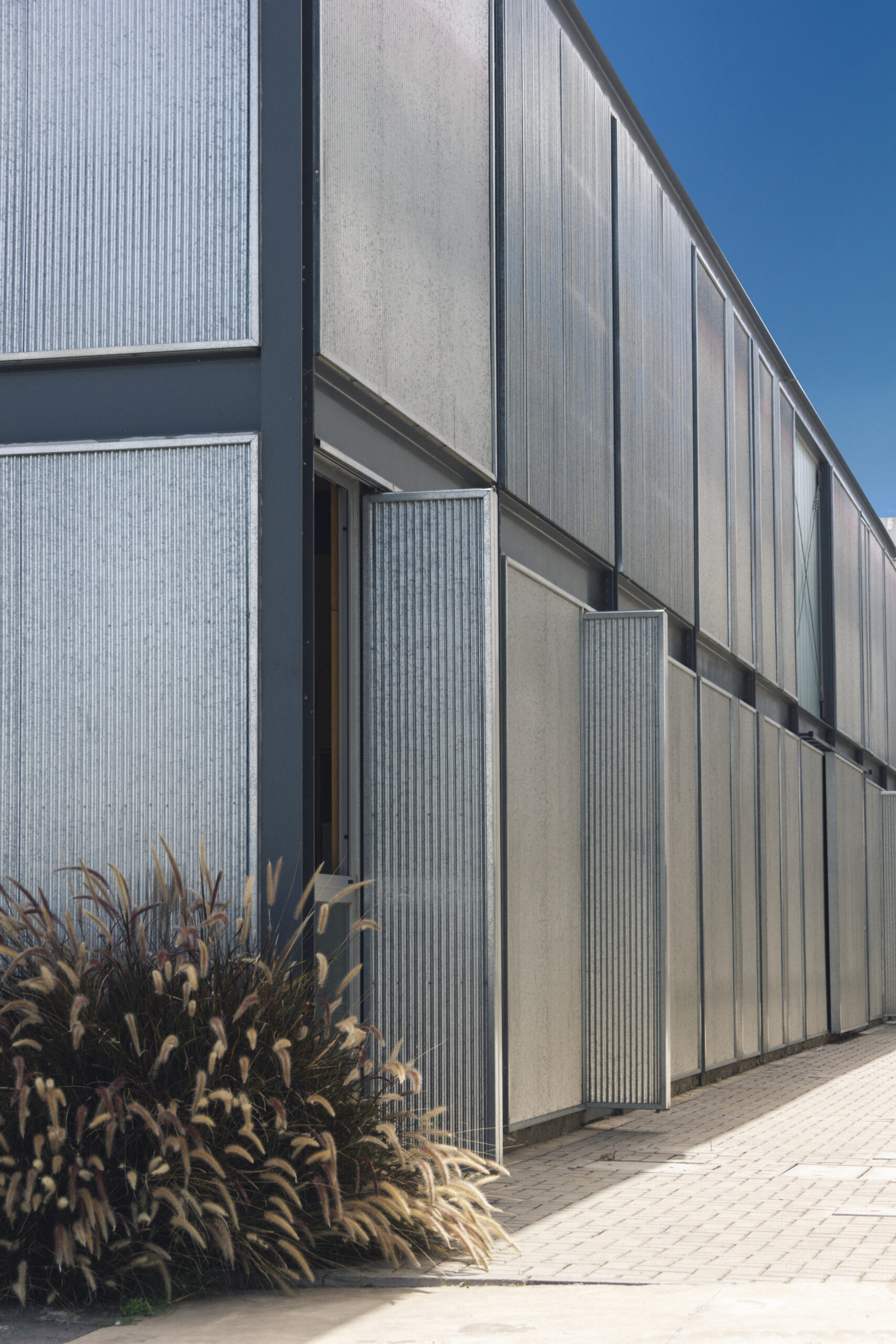
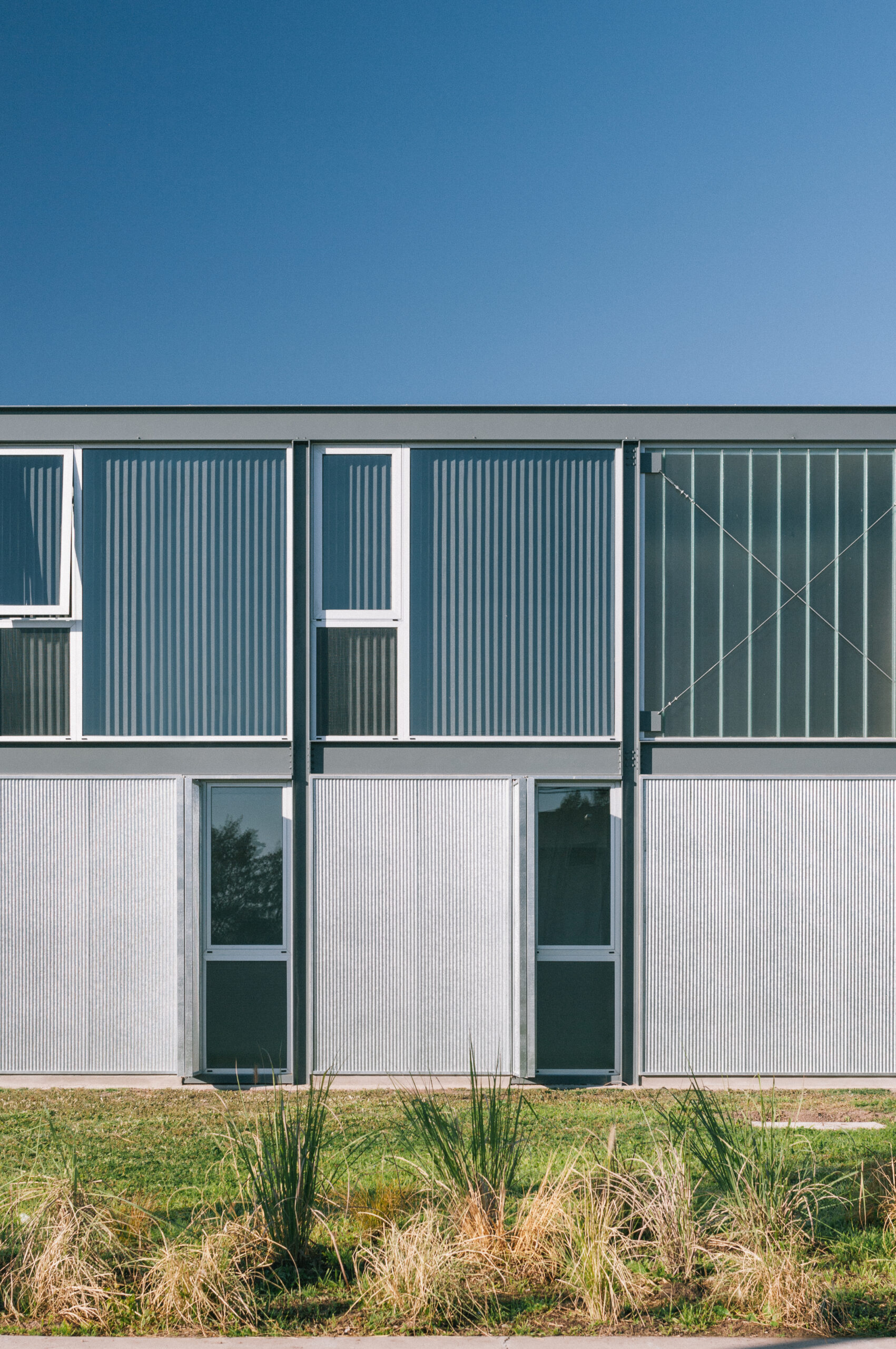
Espacio de Actividades Multiples (EAM)




QO + Taller de Arquitectura la Fundación
Design development and construction management
Landscape design
Interior and furniture design
Collaborators
Design development and construction management
Arq. Agustina Berta
Arq. Emilio Farias
Arq. Santiago Ghione
Interior and furniture design
Arq. Ana Molina Rubino
Interview
Beatrice Galilee
Adrián Villar Rojas
Program
Masterplan, office building and multi-purpose space
Area
4400 m2
Location
Perez, Santa Fe, Argentina.
Year of design
2017
Year of construction
2019 – 2022
Photos
Paraná estudio
Germán Rodríguez Labarre
Prizes and publications
Premio obra construida 2021
Premio obra construida 2022